
Hospitals never sleep, production units and manufacturing industries operate around the clock, and emergency responders remain on duty while most of the world rests. Millions of people work outside the traditional 9-to-5 schedule to keep essential services running. Their work is indispensable, but it often comes at the cost of working against the body’s natural clock timing, also known as the circadian rhythm.
Our circadian rhythm is designed to follow a consistent cycle of sleep and wakefulness, regulated by the natural pattern of light and darkness. Irregular shifts repeatedly disrupt this rhythm, placing many shift workers at risk of developing Shift Work Sleep Disorder (SWSD). It is a well-recognised sleep disorder caused by a persistent mismatch between work schedules and the circadian rhythm.
This misalignment often makes it difficult to stay alert during work and achieve restorative sleep afterwards. One of the earliest and most common signs is persistent fatigue. Although tiredness is frequently accepted as an unavoidable part of shift work, ongoing exhaustion should not be considered normal. Instead, it may indicate that the body is struggling to adapt to a schedule that conflicts with its circadian rhythm.
How Shift Work Affects Performance, and Health
Shift workers face an elevated risk of accidents and workplace injuries, primarily driven by severe circadian rhythm disruption and cumulative fatigue. Studies from occupational safety health bodies show that night shift workers experience a 28% to 30% higher injury risk than their daytime counterparts, a figure that jumps to 36% for those on rotating schedules. This risk compounds dramatically with extended hours and consecutive shifts, working 12-hour shifts increases injury risk by 37%, while four consecutive night shifts elevate accident risk by 36%. These statistics stem from the body’s natural rhythm/circadian rhythm, a physiological low point between 3:00 AM and 6:00 AM where reaction time, cognitive focus, and motor skills experience sharp declines.
The cognitive impact of this fatigue is profound, carrying consequences that extend far beyond the workplace. A worker awake for 17 consecutive hours suffers cognitive impairment equivalent to a Blood Alcohol Concentration (BAC) of 0.05%, escalating to a BAC equivalent of 0.10% after 24 hours of wakefulness. This level of impairment makes the post-shift commute exceptionally hazardous, effectively doubling the risk of motor vehicle crashes due to microsleeps and delayed reflexes. Ultimately, in safety-critical sectors like transportation and healthcare, fatigue accounts for over 20% of high-risk safety incidents, underscoring the urgent need for proactive circadian management and targeted rest strategies.
Impact of Light on Circadian Alignment in Shift Workers
Light is the primary signal that regulates the human circadian rhythm. Specialised light-sensitive cells in the retina send direct signals to the suprachiasmatic nucleus, the master circadian clock in the brain that coordinates sleep and wakefulness. Exposure to bright light suppresses melatonin production to promote alertness, while darkness allows melatonin levels to rise in preparation for sleep.
Shift work disrupts this natural cycle. Exposure to bright light during overnight night shifts keeps the brain alert when it would normally prepare for sleep, while morning sunlight on the journey home can delay the body’s transition into sleep, making daytime rest shorter and more easily disrupted.
Light exposure can help reduce this mismatch. Limiting bright light after a night shift and creating a cool, dark and quiet sleep environment can improve daytime sleep and support recovery. Timed bright light before or during a shift may also help promote alertness when it is needed most. Consistency is equally important. Regular sleep and light routines help the circadian rhythm adapt more effectively to shift schedules.
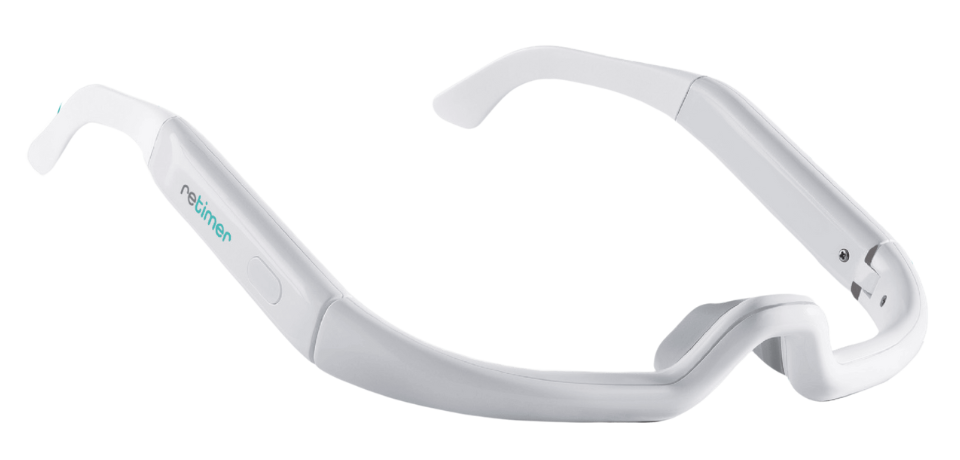
retimer Light Therapy Device Supports Circadian Rhythm for Shift Workers
Applying timed light exposure can be challenging for shift workers, particularly when demanding schedules limit access to natural daylight. Natural sunlight remains the gold standard for regulating the circadian rhythm; however many shift workers are not exposed to the right light at the right time. As a result, maintaining circadian alignment becomes considerably more difficult, increasing the likelihood of poor sleep and excessive daytime sleepiness.
A study published in Science Direct evaluated the effectiveness of the Re-Timer® wearable circadian light device in shift-working nurses. Eighty participants used either Re-Timer or standard care over four weeks, with daytime sleepiness, fatigue, and sleep quality assessed using validated clinical measures. The study found that participants using retimer experienced significantly lower daytime sleepiness after four weeks and improved sleep quality after both two and four weeks compared with the control group. Although fatigue scores did not differ significantly between the groups, the findings demonstrated meaningful improvements in two of the most common challenges associated with shift work.
The researchers concluded that retimer is a safe, effective, low-risk, and cost-effective non-pharmacological intervention that can improve sleep quality and reduce daytime sleepiness in shift-working nurses. They also highlighted its potential role in occupational health programmes to support employee wellbeing, alertness, and workplace performance.
Key Takeaway
Shift Work Sleep Disorder (SWSD) stems from a fundamental conflict between external work schedules and the master circadian pacemaker in the brain. This continuous disruption suppresses melatonin at night and interferes with daytime deep sleep, leading to chronic sleep debt, reduced cognitive performance, and elevated long-term health risks (including cardiovascular and metabolic disorders).
Core Insights for Adaptation:
- Strategic Light Exposure: Timed bright light exposure during a shift boosts alertness by suppressing melatonin, while light restriction (such as wearing blue-blocking glasses) post-shift accelerates daytime sleep onset.
- Anchor Sleep & Routines: Establishing consistent “anchor” sleep windows even on rest days helps prevent the body clock from constantly resetting.
- Performance & Safety: Circadian alignment directly lowers fatigue-related workplace errors and reaction-time delays.
Working 24/7 schedules are often unavoidable, however we can manage our circadian rhythm by strategic and timed exposure to light, sleep hygiene, and consistency in routine. Supporting the biological clock protects long-term health, sharpens operational performance, and significantly improves overall quality of life for essential workers.
References
- https://onlinecpdacademy.co.uk/blog/shift-work-and-fatigue-statistics-uk
- https://www.steppacherlaw.com/blog/2025/01/how-does-shift-work-contribute-to-the-risk-of-workplace-injuries/
- https://www.researchgate.net/publication/228708597_Shift_Work_and_Extended_Working_Hours_as_Risk_Factors_for_Occupational_Injury