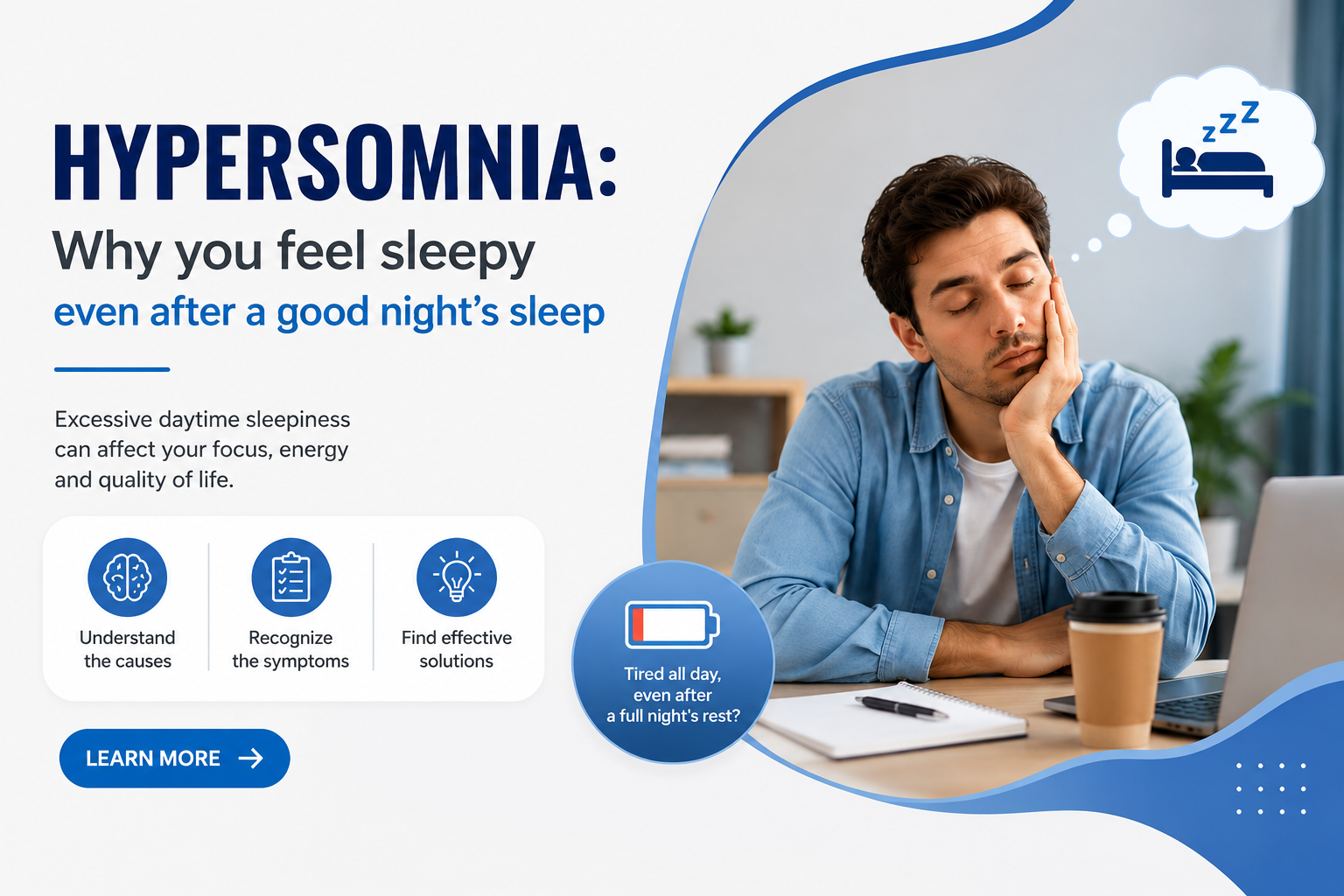
We’ve all experienced that deeply frustrating phenomenon of “fake rest”, you turn in early, sleep soundly through the night for a full eight hours, and yet wake up feeling as though you’re moving through molasses. It’s easy to dismiss this state as ordinary fatigue, the kind of mild weariness fixed by a solid cup of coffee. However, there is a distinct difference between being casually tired and experiencing excessive daytime sleepiness (EDS), an overwhelming urge to sleep that persists despite getting enough hours in bed. When high sleep numbers fail to deliver actual restoration, you may be dealing with hypersomnia.
What is hypersomnia?
Hypersomnia is a neurological condition characterized by excessive daytime sleepiness (EDS) or spending an abnormally long time sleeping.
Fatigue in general can leave us feeling drained, however hypersomnia is fundamentally different, it inflicts a powerful physical need to sleep during waking hours, even after eight or more hours of restful sleep.
Hypersomnia is categorised into two distinct categories: primary and secondary.
Primary hypersomnia occurs as an isolated issue where excessive sleepiness exists on its own without another medical diagnosis to blame, as seen in conditions like Narcolepsy or Idiopathic Hypersomnia. Secondary hypersomnia, on the other hand, is driven by outside influences, such as underlying health conditions, lifestyle factors, or medication side effects. Eventually, the key difference comes down to quantity versus quality just because you’re logging eight or nine hours in bed doesn’t mean your body is getting the deep, restorative rest it actually needs to recharge.
The Unseen Challenge of Hypersomnia
Hypersomnia creates an irresistible physical compulsion to sleep during the day. This profound Excessive Daytime Sleepiness (EDS) goes far beyond feeling tired, it severely impairs cognitive function, drains workplace productivity, and diminishes overall quality of life for millions. Traditional management often relies on pharmacological stimulants to force wakefulness, however targeted chronotherapy offers a far more sustainable answer.
By delivering precise light exposure to realign our body’s circadian clock, light therapy provides a non-invasive, root-cause solution that addresses sleepiness where it starts.

What causes Hypersomnia?
Persistent exhaustion after a long night’s rest is frequently rooted in subtle breakdowns of your sleep architecture, which disrupt the delicate balance between light, deep, and REM sleep stages. A primary contributor is Sleep Apnea, which causes brief pauses in breathing that trigger subconscious ‘micro-awakenings. These brief awakenings pull you out of deep, slow-wave sleep and REM cycles, robbing your brain of essential restoration without you ever realizing you woke up.
Similarly, Restless Legs Syndrome (RLS) creates an overwhelming urge to move your limbs alongside involuntary nighttime twitches, constantly disrupting your sleep depth. While you may technically remain unconscious for eight hours, these underlying conditions prevent your body from ever reaching or sustaining the high-quality rest needed to wake up truly refreshed.
How will you recognise the symptoms of Hypersomnia?
In order to distinguish between routine exhaustion and true hypersomnia, it often comes down to recognizing a few distinct red flags. A primary warning sign is the inability to remain awake during low-stimulation, quiet moments, such as reading a book, sitting through a work meeting, or even driving.
Taking a quick nap rarely offers relief instead, it frequently leads to unrefreshing sleep characterized by ”sleep drunkenness,” a heavy state of disorientation and grogginess upon waking. The exhaustion doesn’t stop at just feeling physically wiped out, it spills over into your everyday life. You might battle constant brain fog, notice your focus and reaction times slowing down, or find yourself snapping at small things. Mornings become a brutal daily struggle, where pulling yourself out of bed feels almost impossible no matter how many alarms you set.
How to Address Hypersomnia: Small changes in lifestyle
You can start by tracking your habits before jumping straight to a doctor’s visit.
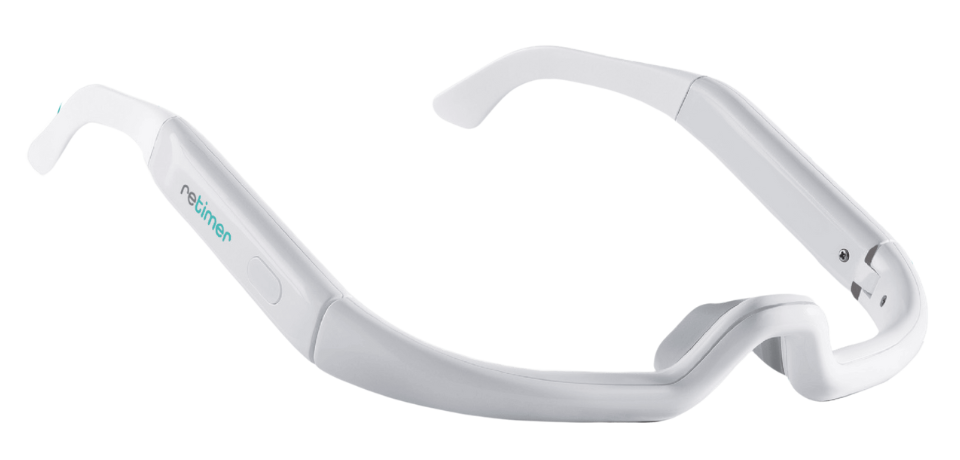
Keep a simple log for a couple of weeks to track your sleep times, afternoon crashes, food, and naps. At the same time, tighten up your daily habits: stick to a consistent sleep schedule, cut off caffeine by midday, and soak in bright light as soon as you wake up. Light therapy glasses, like retimer, are great to help with this, you just pop them on while making coffee, and they help nudge your internal clock into gear.
If none of that moves the needle, that’s your cue to visit a doctor. They’ll start by checking your blood for simple things like thyroid issues or vitamin deficiencies. If those look good, the next step is usually an overnight sleep study to check for hidden breathing disruptions like sleep apnea. If that’s clear, you’ll likely do an MSLT, a daytime test where you take a series of naps so doctors can measure how fast you fall asleep and enter REM. It sounds like a process, but it’s the best way to finally get a clear diagnosis.