
Exclusive Offer: Use code retimer15 and avail 15% off on retimer

Jet Lag Impacts Our Circadian Rhythm : The Science Behind Travel Fatigue

Jet lag can leave travelers feeling physically and mentally drained. It is not merely the result of a long flight or lack of sleep. It is a profound, systemic misalignment between your internal master clock and the external environment of your destination.

The Master Clock: Suprachiasmatic Nucleus (SCN)

At the core of our sleep-wake cycle is a cluster of approximately 20,000 neurons located in the hypothalamus of the brain called the Suprachiasmatic Nucleus (SCN). The Suprachiasmatic Nucleus (SCN) acts as the body’s master pacemaker, orchestrating an array of daily cyclical fluctuations known as circadian rhythms. These rhythms dictate more than just when you feel tired; they regulate core body temperature, hormone production, blood pressure, digestive enzyme secretion, and cognitive performance over a roughly 24-hour cycle.
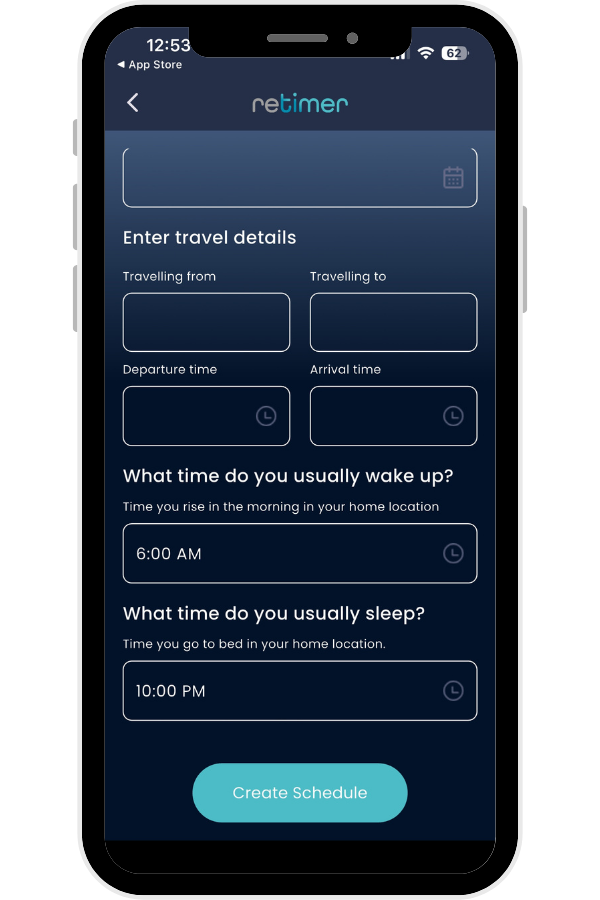
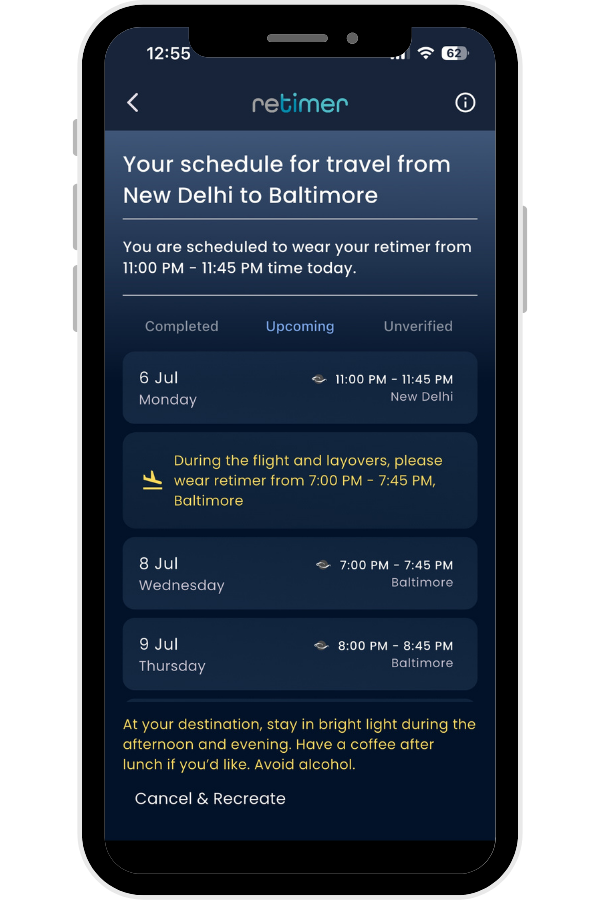
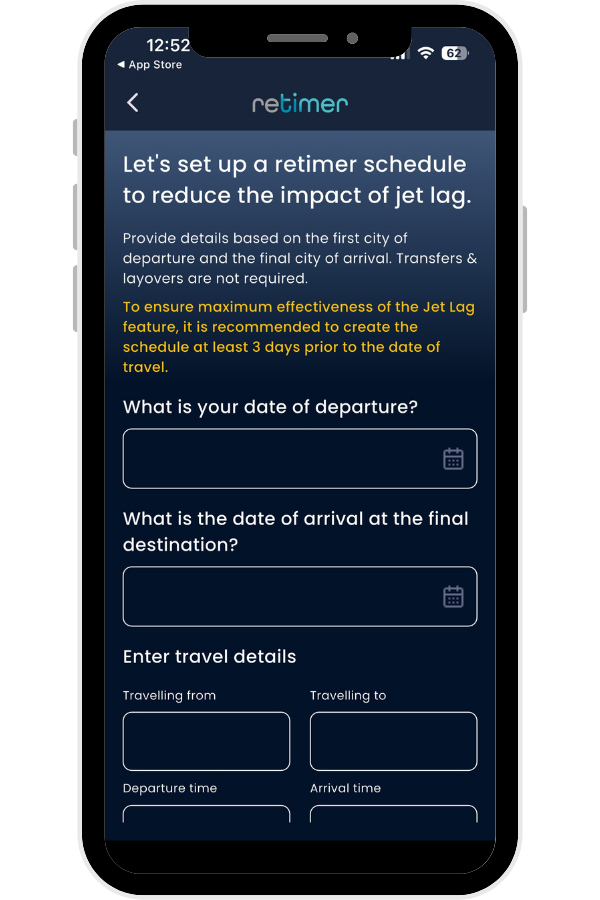
Jet Lag Calculator

Jet Lag Calculator

  • What time do you go to bed?

  • What time do you wake up?

  • What city are you flying from?

  • What city are you flying to?

  • What date are you departing?

The Mechanism of Entrainment and Jet Lag 

Under normal conditions, the SCN relies on external environmental cues to keep our internal clock synchronized with the Earth’s 24-hour rotation. The most powerful cue by far is natural sunlight.

When specialized photosensitive cells in your eyes detect light, they transmit electrical signals directly to the SCN via the retinohypothalamic tract. The SCN then processes this data to align your body’s functions with the daytime.

When you cross multiple time zones rapidly, your external environment changes instantly, but your internal SCN cannot adapt at the same rate. The SCN typically requires roughly one day of adjustment for every time zone crossed. Until it catches up, your body experiences circadian desynchrony for example your internal clock is telling your organs it is 3:00 AM (time to sleep, lower body temperature, and slow digestion), while your destination’s external environment is at 11:00 AM (bright sunlight and high activity).

The Hormonal Disruption: Melatonin Suppression and Timing 

A primary way the SCN controls our sleep-wake cycle is by regulating the pineal gland’s secretion of melatonin, the hormone responsible for signaling darkness and initiating sleepiness.
  • In normal conditions: As evening approaches and light levels drop, the SCN signals the pineal gland to ramp up melatonin production, creating a “sleep window.”
  • During jet lag: If you fly eastward, you arrive at a destination where the sun rises hours before your internal clock expects it. The exposure to early morning light triggers immediate melatonin suppression via the SCN. However, because your body hasn’t completed its natural nighttime cycle, this sudden suppression leaves you waking up prematurely, feeling groggy, unrefreshed, and suffering from acute sleep fragmentation.
  • The reverse effect: Conversely, when your internal clock dictates it is nighttime while you are standing in broad daylight in a new time zone, your body attempts to secrete melatonin. The conflict between ambient sunlight trying to force melatonin suppression and your SCN trying to drive sleepiness results in profound daytime fatigue, brain fog, and diminished alertness.
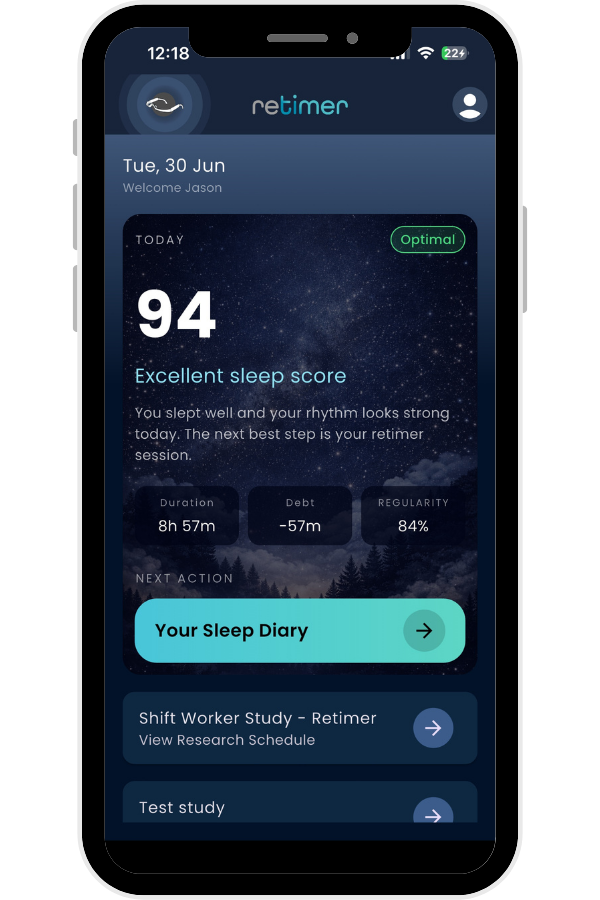
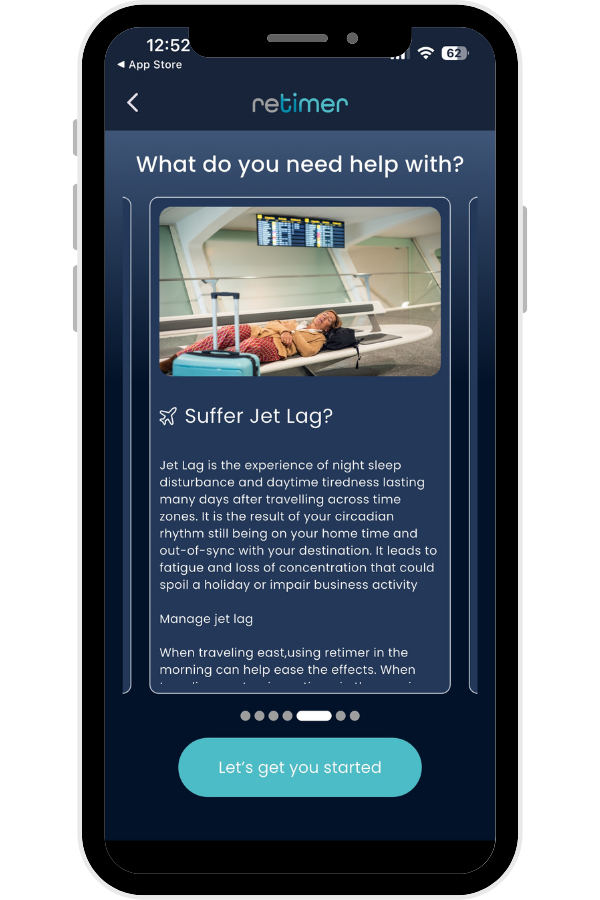
How retimer 3 Can Help In Correcting Circadian Desynchrony?

Traditional methods of combating jet lag-such as consuming caffeine or taking synthetic melatonin supplements-often act merely as temporary band-aids. They mask symptoms rather than addressing the neurological root cause within the Suprachiasmatic Nucleus (SCN).

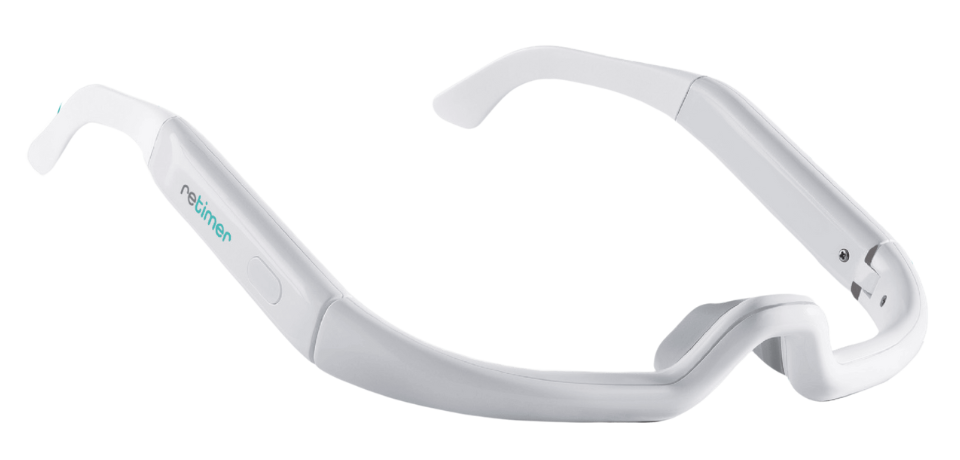
retimer 3 Light Therapy Glasses bypass these limitations by delivering a mathematically calibrated, 100% UV-free green-blue light directly to the eye’s specialized photoreceptors.

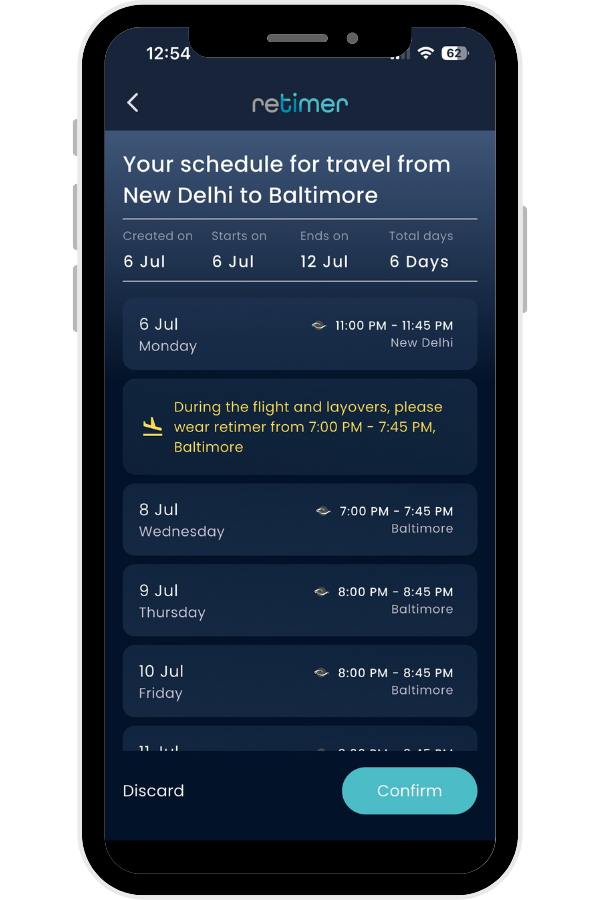
Targeted Resetting: By wearing retimer 3 during the specific windows calculated by our Jet Lag Calculator, you mimic natural daylight at the exact biological moment your master clock requires it. 

During jet lag: If you fly eastward, you arrive at a destination where the sun rises hours before your internal clock expects it. The exposure to early morning light triggers immediate melatonin suppression via the SCN. However, because your body hasn’t completed its natural nighttime cycle, this sudden suppression leaves you waking up prematurely, feeling groggy, unrefreshed, and suffering from acute sleep fragmentation.

The reverse effect: Conversely, when your internal clock dictates it is nighttime while you are standing in broad daylight in a new time zone, your body attempts to secrete melatonin. The conflict between ambient sunlight trying to force melatonin suppression and your SCN trying to drive sleepiness results in profound daytime fatigue, brain fog, and diminished alertness. 
Shopping cart0
There are no products in the cart!