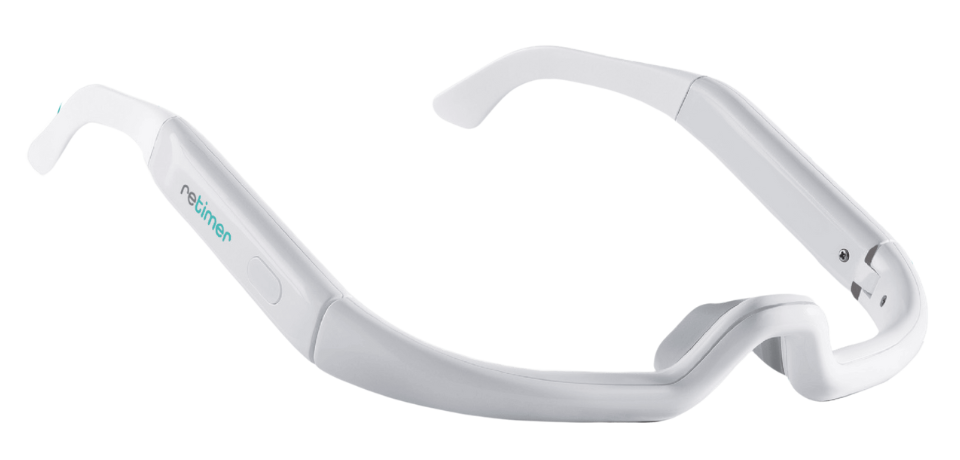
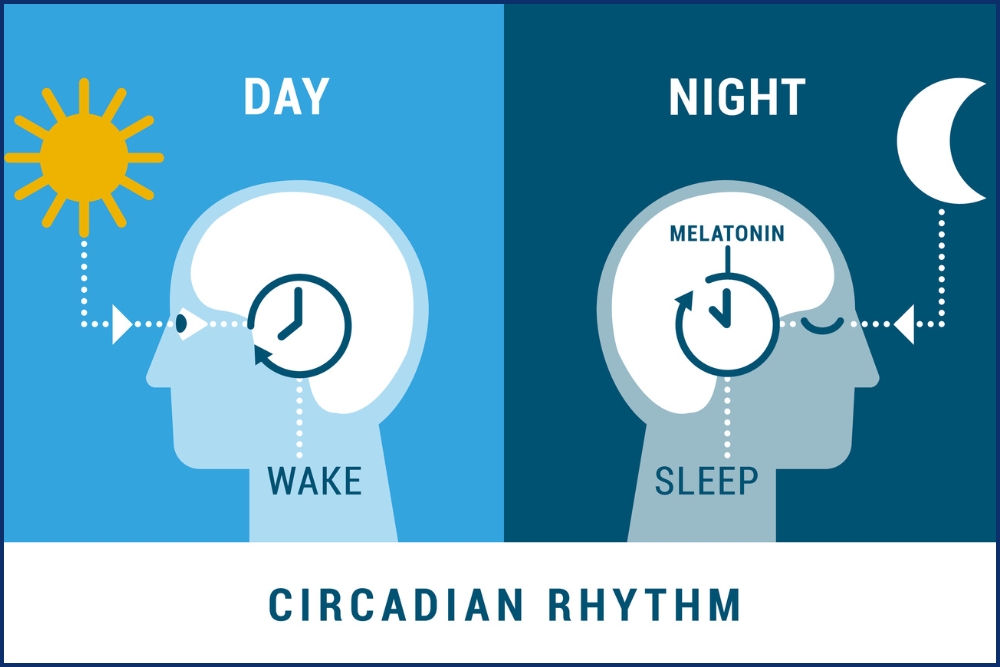
For people whose sleep difficulties stem from a delayed body clock rather than classic insomnia, the real challenge is not simply falling asleep but sending the brain a strong enough signal that daytime starts earlier and biological night begins earlier. Used correctly, retimer and melatonin can do exactly that as one supplies a targeted morning light cue; the other provides an evening darkness signal. Together, they can produce a stronger phase-advance message than either intervention on its own.
The Problem – Delayed Sleep Phase
Delayed circadian timing is common, costly and frequently mismanaged, it affects students who cannot switch off until after midnight, professionals who wake unrefreshed for early meetings, and adults who function reasonably well on weekends only to unravel once Monday demands a conventional start time. In many of these cases, the problem is not a lack of tiredness in the abstract but that the circadian clock is running late. If the underlying timing problem is not addressed, sleep hygiene tips may help only marginally, and sedating products may simply make mornings worse.
The Solution – retimer and melatonin
retimer together with melatonin is not a blanket solution for every poor sleeper, it is most compelling for delayed sleep-wake phase disorder and related patterns of chronic sleep-onset delay, For such people, the goal is not to knock the user out at night but to shift the circadian timing itself. retimer supports the morning side of that reset and Melatonin, when timed correctly and used at an appropriate dose, can support the evening side. The clinical value lies in the combination and in the precision of the timing.
Developed out of Flinders University sleep research, retimer is a wearable blue-green light device designed to influence circadian timing without tethering the user to a desk-bound light box. A product of more than 25 years of sleep and circadian research, the device is engineered so the angle of delivered light remains optimised while the wearer moves around. That portability matters because adherence is the real bottleneck in light therapy and a tool only works when people can fit it into real mornings.
For delayed circadian sleep problems, retimer’s role is straightforward: morning use is intended to move sleep and wake timing earlier aligning with the basic chronobiology. Morning light, delivered after the biological night has passed its lowest point, tends to advance circadian timing; evening light can do the opposite. retimer’s own usage guidance reflects this principle, noting that morning use generally makes sleep and wake times earlier, while evening use generally pushes them later. In other words, retimer is not intrinsically a sleep aid but a timing device. Used at the wrong hour, it can work against the user and used at the correct hour, it becomes a powerful light cue that a late body clock has been missing.
Melatonin contributes something different. In circadian medicine, melatonin is not merely a sedative shortcut; but a time cue. The American Academy of Sleep Medicine suggests strategically timed melatonin for adults with delayed sleep-wake phase disorder, although it grades the recommendation as weak because the evidence base remains limited and product quality varies in the supplement market. That caution is important as Melatonin is easy to buy, but easy access does not make timing unimportant. The consumer mistake is to treat it as a larger-is-better sleep pill but the research signal is far more nuanced: lower-dose, correctly timed melatonin can be useful precisely because it functions as a circadian nudge rather than a pharmacological hammer.
The Research
One of the most useful modern trials for consumer interpretation came from the Australian DelSoM study conducted jointly by researchers at Monash University, the Woolcock Institute of Medical Research, and Flinders University. In that double-blind randomised clinical trial, adults with delayed sleep-wake phase disorder took 0.5 mg of fast-release melatonin one hour before their desired bedtime for at least five consecutive nights per week over four weeks, while also following behavioural sleep-wake scheduling. Relative to placebo, sleep onset occurred 34 minutes earlier. The melatonin group also improved on measures of sleep-related impairment, sleep disturbance, insomnia severity and functional disability, with clinician-rated improvement seen in 52.8% of the melatonin group versus 24.0% of placebo. Low-dose melatonin, used with timing discipline, can materially improve the start of the sleep episode and next-day functioning.
Where retimer becomes especially valuable is in completing that picture. Melatonin may help bring biological night forward, but light remains the most powerful external regulator of the circadian system. A controlled study found that morning bright light combined with early evening exogenous melatonin produced a greater phase advance of dim light melatonin onset than either treatment alone. The American Academy of Sleep Medicine summarised the finding plainly: morning bright light plus early evening melatonin yielded a larger advance in circadian timing than either intervention by itself. The two cues are not redundant, they reinforce one another. Light says, “day starts earlier.” Melatonin says, “night starts earlier.” The clock receives a cleaner, stronger instruction.
A second study strengthens the maintenance argument, which is often where sleep plans fail. In a randomised controlled trial in adolescents and young adults with delayed sleep phase disorder, short-term gains were seen across groups during a structured schedule change. But at three-month follow-up, only the group maintained on combined bright light and melatonin preserved the advanced sleep phase; those who stopped treatment drifted back toward delayed sleep times. The combined approach appears especially valuable not only for initiating a shift, but for holding the new timing in place once ordinary life resumes.
This combined solution is strongest for people with delayed sleep timing: those who cannot fall asleep at a conventional hour, are hard to wake in the morning, feel more alert late at night, and often sleep normally when allowed to keep their preferred schedule. It is not the right framing for every form of insomnia. If someone wakes too early, has untreated sleep apnoea, cycles through mania, or is using medication that alters light sensitivity, a different clinical pathway may be required. retimer itself advises caution for people with photosensitivity, certain retinal or eye conditions, photosensitising medicines, and bipolar disorder. The AASM guideline notes that melatonin product quality can vary and that caution is warranted with issues such as warfarin use, epilepsy and some metabolic concerns. Correct use begins with correct patient selection.
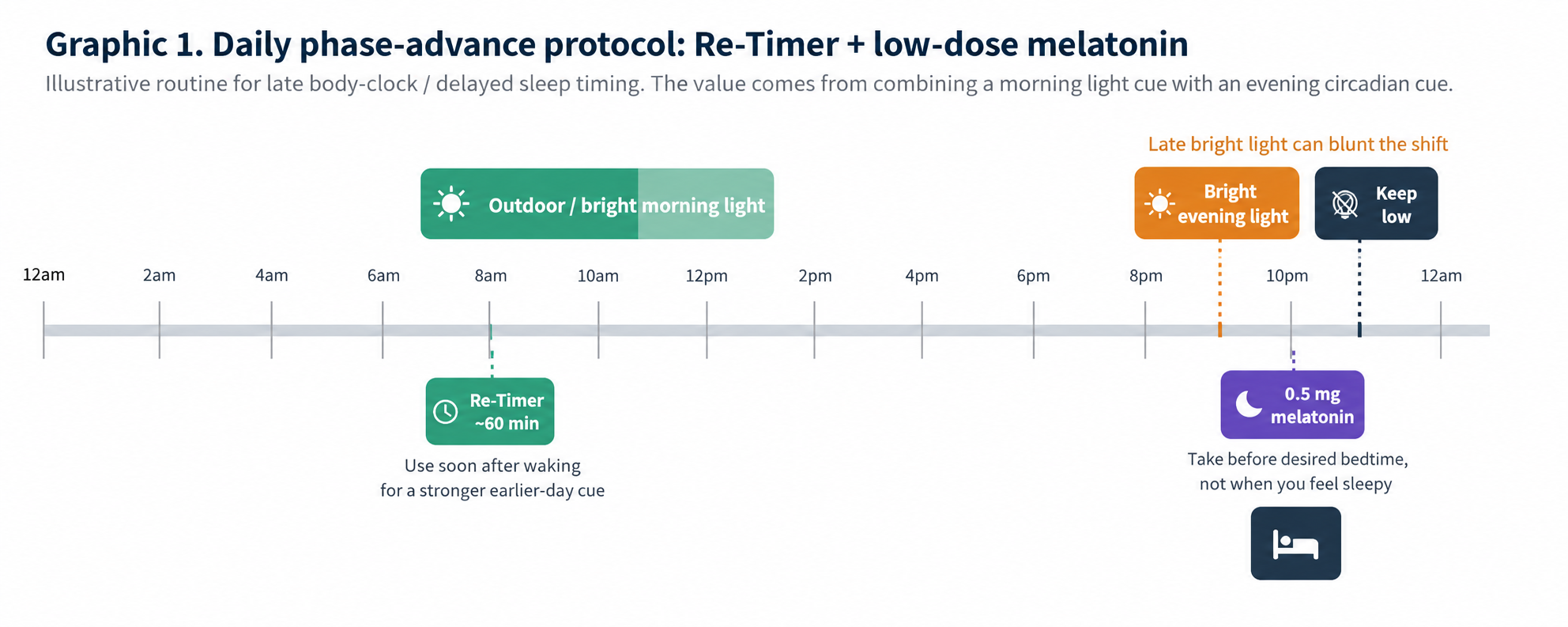
Graphic 1. Daily phase-advance protocol for correctly timed combined use.
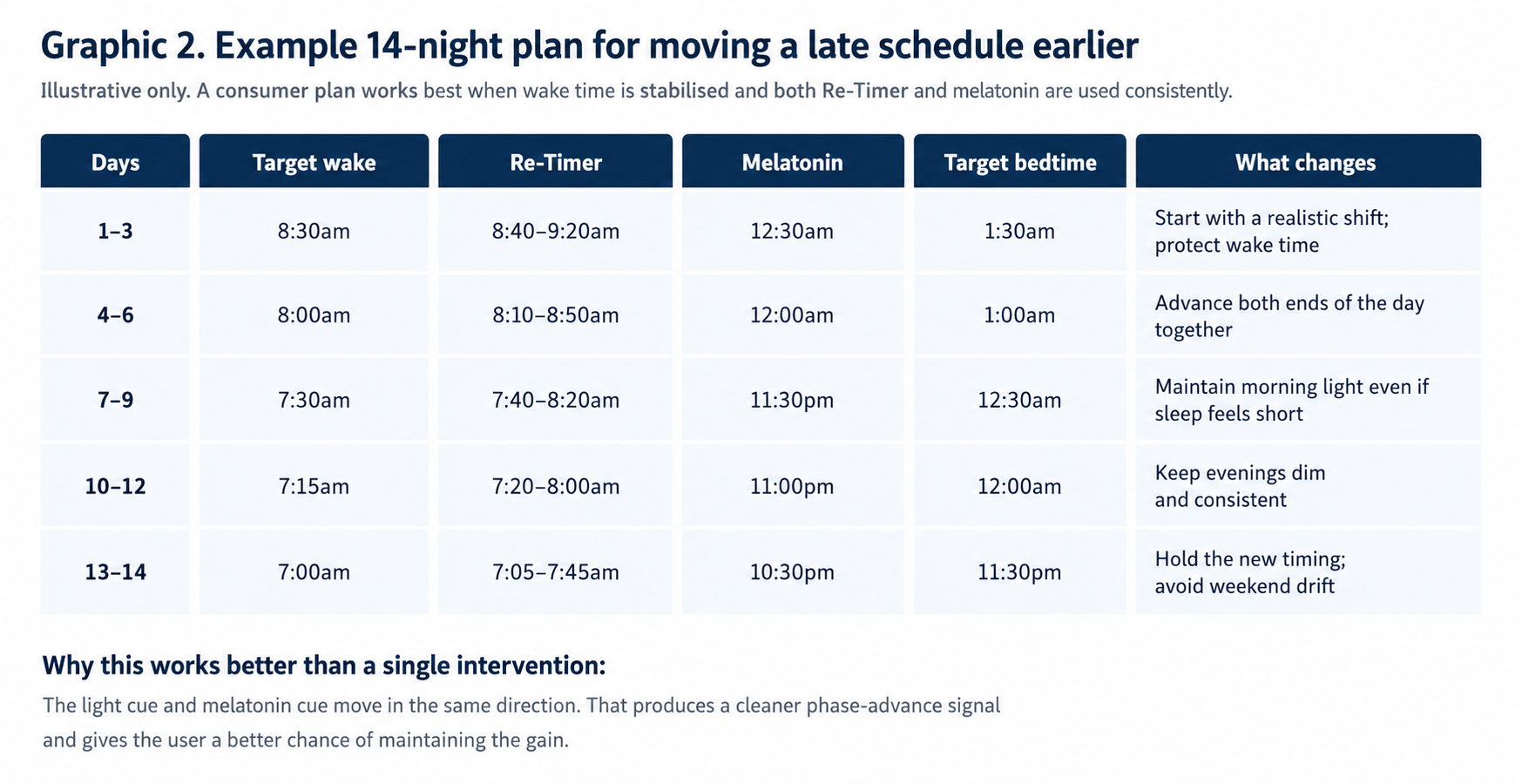
Graphic 2. Example two-week phase-advance plan showing how timing can be moved earlier progressively.
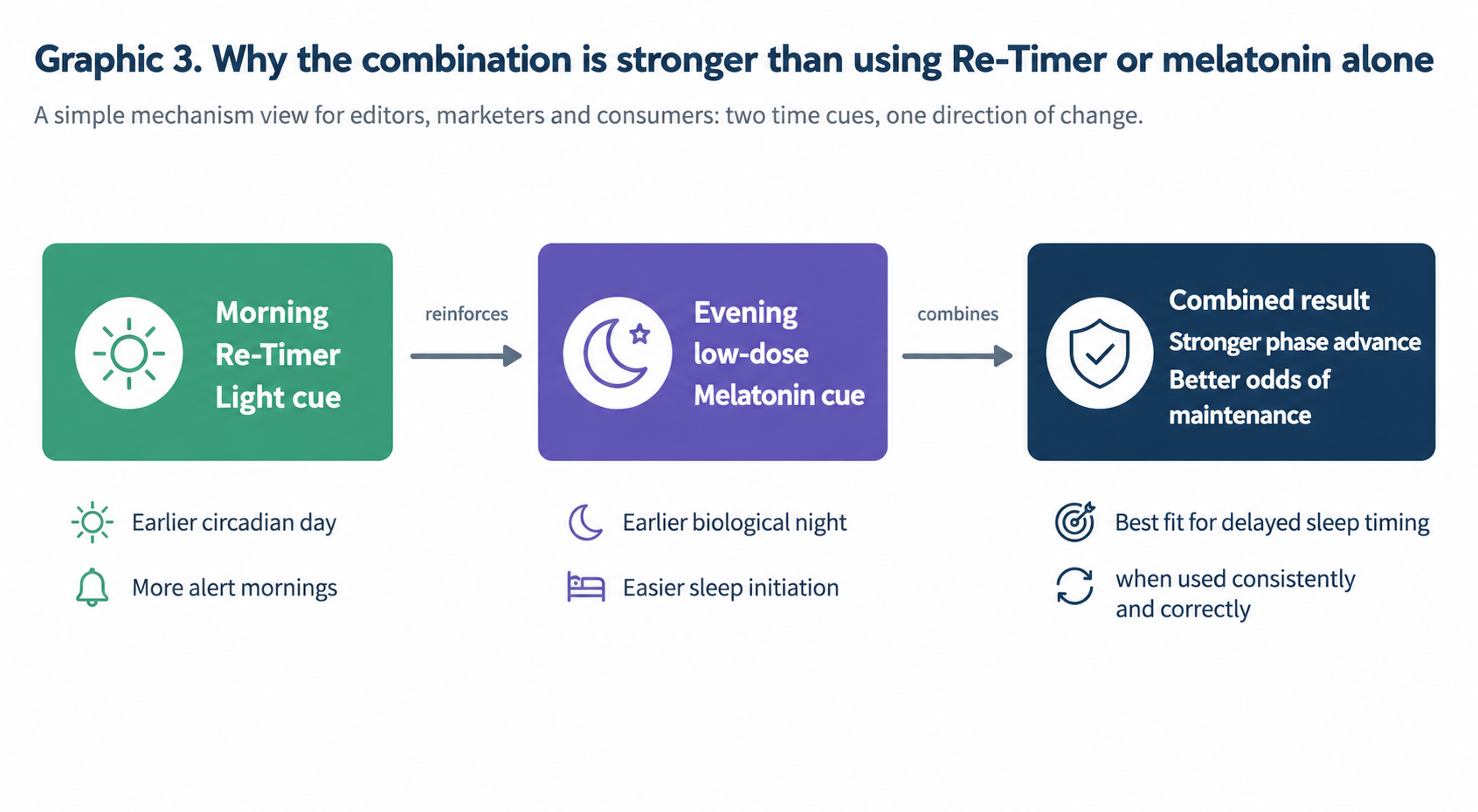
Graphic 3. Mechanism diagram explaining why the combined signal can be stronger than either intervention alone.
Conclusion
For people whose poor sleep is driven by delayed circadian rhythms, retimer combined with Melatonin offers a biologically plausible, research-backed way to address the underlying timing problem. Morning retimer use can help shift the clock earlier, and the evidence suggests that pairing light with strategically timed low-dose melatonin may improve both impact and durability.
retimer is not just about getting more light, it is about getting the right light at the right time.
Consumers who feel trapped between their internal clock and the obligations of real life, that precision can make the difference between another frustrating sleep hack and a treatment strategy with genuine staying power.
Medical note: melatonin, light timing and sleep schedules should ideally be discussed with a qualified clinician, especially where symptoms are severe, persistent, or accompanied by mood disorders, eye disease, bipolar disorder, pregnancy, seizure history, or prescription medications.
References
- American Academy of Sleep Medicine. Combining bright light with melatonin produces greater advance in circadian timing.
- Sletten TL et al. Efficacy of melatonin with behavioural sleep-wake scheduling for delayed sleep-wake phase disorder: A double-blind, randomised clinical trial.
- American Academy of Sleep Medicine. Clinical practice guideline for the treatment of intrinsic circadian rhythm sleep-wake disorders.
- Sleep Foundation. Delayed Sleep-Wake Phase Disorder.
- Flinders University. retimer.
- Sleep Health Foundation. Delayed Sleep-Wake Phase Disorder (DSWPD).
- retimer. Frequently Asked Questions.
- Crowley SJ, Eastman CI. Delayed sleep phase disorder: clinical perspective with a focus on light therapy.
- Burgess HJ et al. Combination of light and melatonin time cues for phase advancing the human circadian clock.
- Saxvig IW et al. A randomized controlled trial with bright light and melatonin for delayed sleep phase disorder: effects on subjective and objective sleep.
- Swanson LM et al. An Open-Label Pilot Study of a Home Wearable Light Therapy Device.
- Youngstedt SD et al. A placebo-controlled pilot study of a wearable morning bright light treatment.