
The global skincare industry is worth more than USD 120 billion, with consumers investing heavily in products that promise brighter, firmer, and younger-looking skin. These products play an important role in supporting skin health. However, one of the most effective investments we can make in our skin doesn’t come with a price tag, it starts with a good night’s sleep.
Every night, while our body rests, our skin shifts into repair mode. It repairs daily damage, rebuilds collagen, restores hydration and strengthens its natural protective barrier. This remarkable overnight renewal process lays the foundation for healthy, resilient skin in ways that even the most advanced skincare products can only support, not replace.
Research shows that quality sleep creates ideal conditions for skin to recover from the daily effects of pollution, UV exposure, stress, and environmental damage. Our daytime skincare routine helps protect and nourish our skin, but the real restoration happens while we sleep. If healthier, firmer, and more radiant skin is the goal, getting enough restorative sleep may be just as important as the products we apply. The idea of beauty sleep isn’t just an old saying, it actually holds true.
Our Skin Repairs Itself While We Sleep
Our skin follows its own biological rhythm. Skin’s priority during daytime is protection, acting as a barrier against UV radiation, pollution, bacteria and other environmental stressors. At night its focus shifts from defense to repair.
Sleep accelerates cell turnover, replacing damaged skin cells with healthier ones. Blood circulation to the skin also improves, delivering oxygen and nutrients that support tissue repair and recovery. This overnight renewal helps improve skin texture, maintain hydration and restore a healthy-looking complexion over time. Repairing surface damage is only part of the story, beneath the surface our body is also working to maintain one of the skin’s most important building blocks, which is collagen.
The Connect Between Sleep, Collagen, and Skin Health
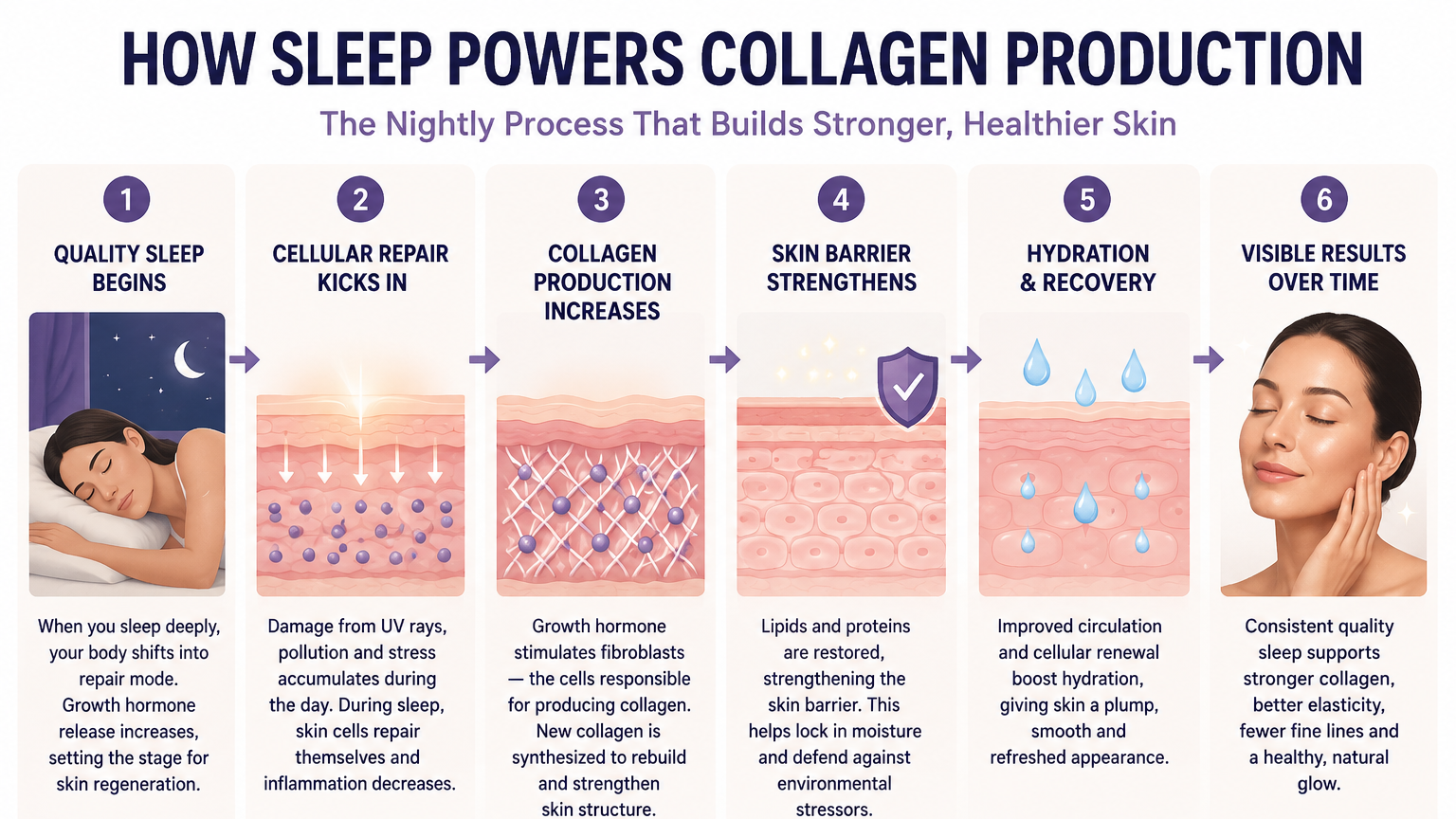
Collagen is the protein that helps keep skin firm, smooth, and resilient. It supports the skin’s structure, maintains elasticity, and softens the appearance of fine lines. Sleep provides one of the body’s most important opportunities for repair and renewal, even as collagen naturally declines with age. The body releases growth hormone during sleep, which supports tissue repair and collagen production. However, overnight skin renewal extends beyond collagen alone. Sleep also supports skin barrier repair, hydration, inflammation control, and recovery processes that help skin maintain a healthy, youthful appearance.
One of the most widely cited clinical studies on sleep and skin health, published in Clinical and Experimental Dermatology by P Oyetakin-White, A Suggs, B Koo, M S Matsui, D Yarosh, K D Cooper, E D Baron examined 60 healthy women and compared those with chronic poor sleep (sleeping ≤5 hours with poor sleep quality) against women who consistently slept 7–9 hours and reported good-quality sleep. They found that poor sleepers exhibited significantly greater signs of intrinsic skin ageing, including fine lines, uneven pigmentation, reduced elasticity, and skin laxity. They also had a weaker skin barrier at baseline, indicated by higher transepidermal water loss (TEWL), a measure of how effectively the skin retains moisture.
Good sleepers recovered 30% faster over 72 hours than poor sleepers even when the skin barrier was deliberately disrupted under controlled conditions. Similarly, after controlled UV exposure, good sleepers experienced a significantly faster reduction in skin redness, suggesting more efficient repair and resolution of inflammation. Participants with better sleep also rated their own appearance and physical attractiveness significantly higher than poor sleepers beyond these physiological differences. These findings demonstrate that chronic poor sleep makes the skin look tired and can also impair its ability to repair, recover, and maintain a healthy, youthful appearance.
Similar findings have been reported in research examining sleep quality and skin appearance in The Impact of Sleep Quality on Skin Color by Jiali Xu, Xiaoxuan Cai, Jianjun Qiao, Hong Fang investigated the relationship between sleep quality and skin colour in healthy adults. Sleep is known to play an important role in immune function, hormonal regulation, and skin health, but its effect on skin appearance has been less well understood. The researchers compared individuals with good and poor sleep quality using both subjective sleep assessments and objective measurements of skin colour.
This study found that poorer sleep quality was associated with visible changes in skin appearance, including reduced skin brightness and a duller complexion. Participants with poor sleep also showed alterations in skin colour parameters that may reflect impaired skin health and reduced vitality. The findings suggest that inadequate sleep affects not only internal physiological processes but also outward skin appearance, reinforcing the importance of good sleep for maintaining healthy-looking skin.
The authors conclude that improving sleep quality may help preserve skin appearance and overall skin health, although further research is needed to better understand the biological mechanisms linking sleep and skin colour.
Inadequate Sleep Leads to Stress, and Shows Up on Our Skin
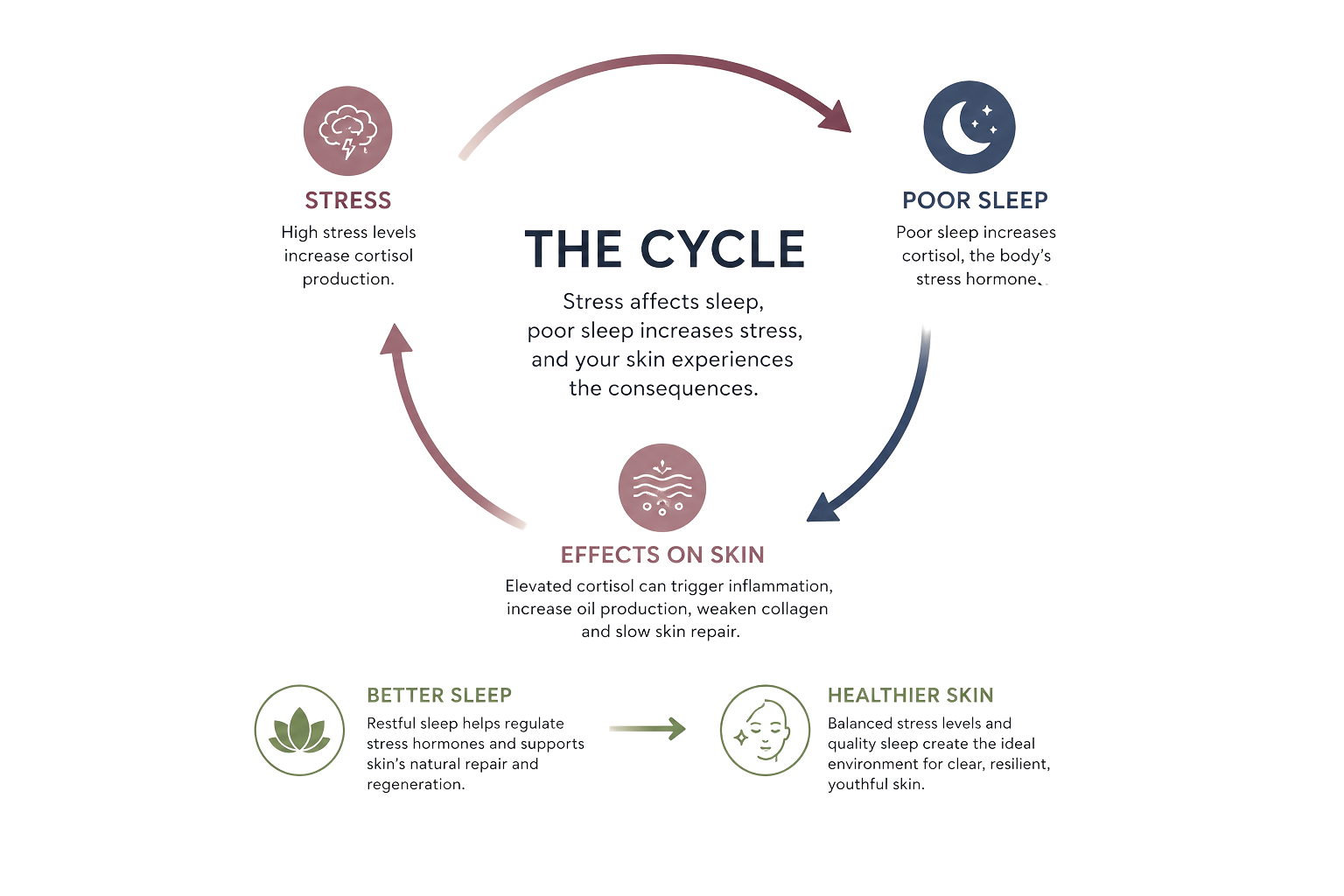
Inadequate sleep and stress are closely connected, creating a cycle that can have lasting effects on our skin. Sleep deprivation leads to our body producing more cortisol, the primary stress hormone. Elevated cortisol makes it harder to relax and achieve restorative sleep, while also interfering with the skin’s natural overnight repair process.
In a review published in the Journal of Investigative Dermatology, Petra C Arck, Andrzej Slominski, Theoharis C Theoharides, Eva M J Peters, Ralf Paus describe the “brain–skin connection” the complex communication network through which psychological stress influences skin health. The authors explain that the skin is not simply a passive barrier; it is an active neuroimmunology organ that both responds to and produces stress-related signaling molecules. Hormones and neuropeptides such as corticotropin-releasing hormone (CRH), cortisol, adrenaline, substance P, and nerve growth factors are released, triggering inflammatory pathways within the skin during periods of chronic stress. These biological responses can impair the skin’s ability to maintain its protective barrier, regulate immune function, and recover from daily environmental damage.
The review also highlights that prolonged stress can create a cycle of inflammation and oxidative stress, making the skin more vulnerable to dryness, irritation, delayed healing, and flare-ups of inflammatory skin conditions such as acne, eczema, psoriasis, and rosacea. At the same time, stress-induced inflammation may accelerate processes associated with skin ageing by disrupting normal repair and regeneration. These findings support the concept of “skin stress” a physiological state in which chronic psychological stress compromises the skin’s ability to protect, repair, and renew itself.
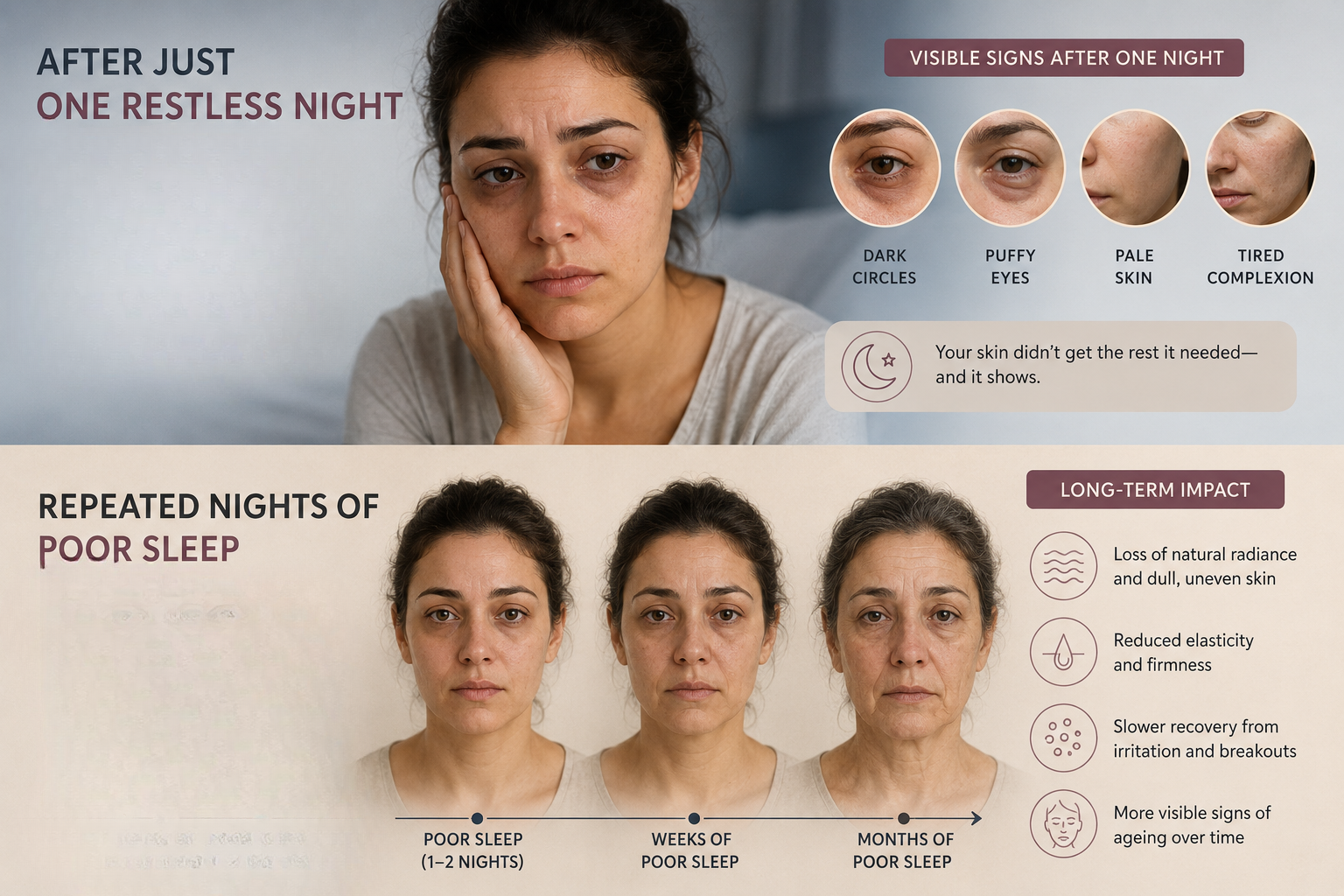
Elevated stress hormones, increased inflammation, and impaired overnight repair can weaken the skin barrier, reduce its resilience, and accelerate visible signs of ageing over time. Supporting healthy sleep, the body is better equipped to regulate these stress responses and maintain the skin’s natural ability to protect, repair, and renew itself.
The Role of Light Therapy in Sleep and Skin Health
Light therapy is a broad term, but not all light therapies work in the same way. Some are designed to treat the skin directly, while others work by improving our circadian rhythm and sleep quality. Understanding the difference helps explain how light can support healthier skin through multiple pathways.
Light Therapies That Work for Skin
Red and blue light therapies are commonly used in dermatology and cosmetic skincare. Although they both use specific wavelengths of light, they serve different purposes.
Blue light therapy primarily targets acne. It works by reducing the acne-causing bacteria on the skin, helping to decrease inflammation and breakouts. It is often used as part of acne treatment plans and may be combined with other topical therapies for better results.
Red light therapy penetrates deeper into the skin and is commonly used to stimulate cellular activity. Some studies suggest it may support collagen production, reduce inflammation, and improve wound healing, making it a popular treatment for improving skin texture and reducing the appearance of fine lines.
These therapies are applied directly to the skin, with the goal of producing localised improvements in skin health. They do not address sleep quality or the biological processes that occur while we sleep.
Light Therapy That Works Through Better Sleep
A different approach is to use light therapy to improve the body’s circadian rhythm. Rather than targeting the skin itself, circadian light therapy works by helping regulate the sleep-wake cycle.
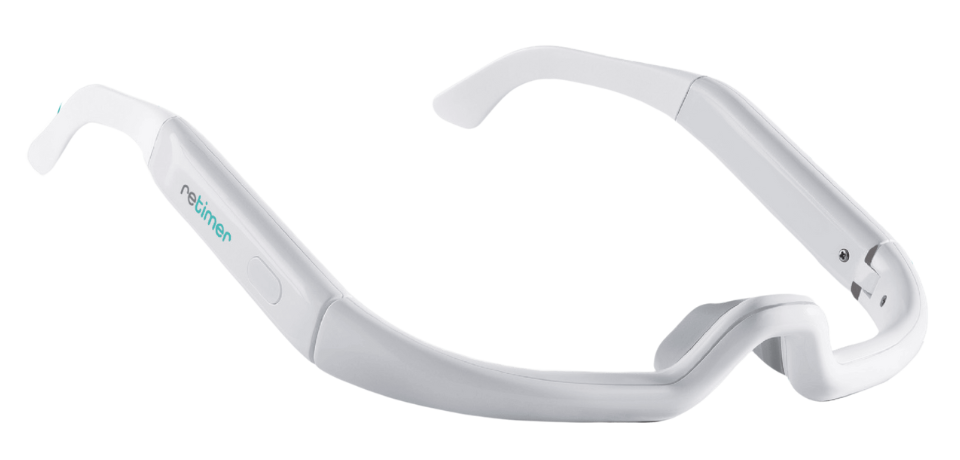
Devices like retimer deliver carefully timed green-blue light to the eyes. This light reaches specialised cells in the retina that communicate with the brain’s master body clock, helping shift or strengthen circadian timing. As sleep becomes more regular and restorative, the body is better able to carry out the overnight repair processes that are essential for healthy skin.
Improved sleep supports balanced cortisol levels, growth hormone release during deep sleep, tissue repair, and collagen production. These are the natural mechanisms that help maintain skin elasticity, reduce inflammation, and promote a healthier complexion.
In other words, while red and blue light therapies work on the skin, circadian light therapy works through the body. Improving sleep quality supports the internal biological processes that allow skin to repair and regenerate naturally each night.
The Bigger Picture: Healthy Skin Starts with Healthy Sleep
Poor sleep contributes to dull skin, slows healing, or shows premature signs of aging, improving sleep quality can deliver benefits that go well beyond feeling more rested. Quality sleep creates the conditions our skin needs to naturally recover, repair, and renew itself every night.
Healthy skin isn’t built by just using skincare products. Expensive applications and treatments can support the process but cannot replace what happens while we sleep. Each night of restorative sleep gives our skin the chance to repair daily damage, rebuild collagen, and restore its natural resilience.
Prioritizing quality sleep, managing stress, and maintaining healthy daily habits lets our skin recover the way it was designed to. The most powerful skincare routine begins when we turn off the lights, so before investing in our next product, make sure we’re investing in quality sleep first.