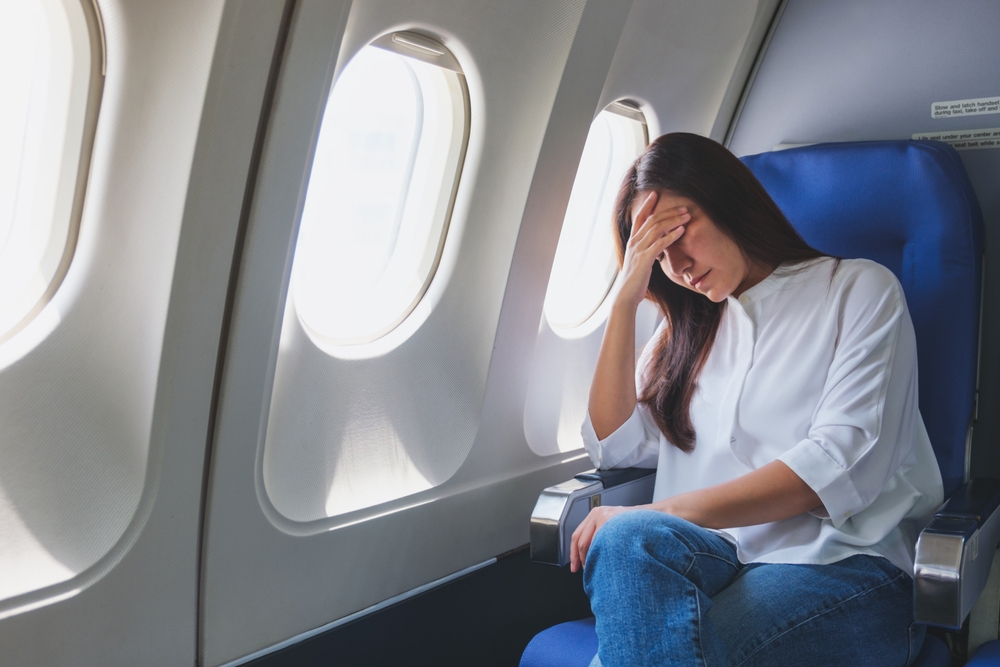
Jet lag is one of the most common challenges of long-distance travel, affecting sleep quality, daytime alertness and mental performance. While many people think of it as an unavoidable part of flying, jet lag is actually caused by a temporary mismatch between your body’s internal biological clock and the local light-dark cycle after crossing multiple time zones. The key to recovering faster is to understand this process and why precisely timed light therapy has become a trusted strategy for reducing the effects of jet lag.
Jet lag is easier to understand once you know how the body’s internal master clock works.
The Master Clock: Suprachiasmatic Nucleus (SCN)
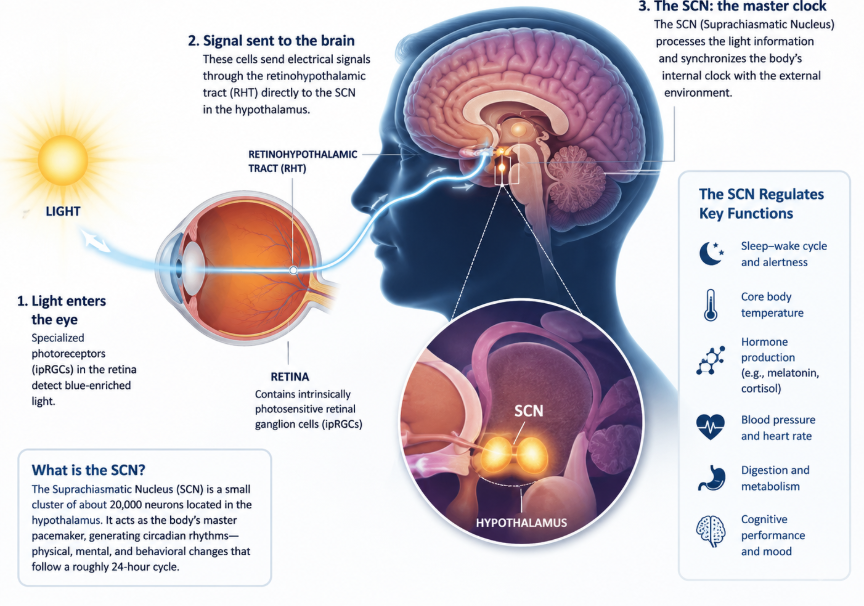
At the core of our sleep-wake cycle lies a cluster of approximately 20,000 neurons located in the hypothalamus called the Suprachiasmatic Nucleus (SCN). Acting as the body’s master circadian pacemaker, the SCN regulates our internal biological clock and orchestrates the circadian rhythms that govern daily physiological processes.
These rhythms influence far more than when we feel sleepy. They regulate core body temperature, hormone production, blood pressure, digestive enzyme secretion and cognitive performance over a roughly 24-hour cycle.
The Mechanism of Entrainment and Jet Lag
Under normal conditions, the SCN relies on external environmental cues to keep our internal clock synchronised with the Earth’s 24-hour rotation. The most powerful cue is natural sunlight.
When specialised photosensitive cells in the eye detect light, they transmit electrical signals to the SCN via the retinohypothalamic tract. The SCN processes these signals to align the body’s physiological functions with the external day-night cycle.
When you experience rapid transmeridian travel, your external environment changes immediately, but your internal clock cannot adapt at the same rate. The SCN typically requires approximately one day to adjust for each time zone crossed. Until then, your body experiences circadian desynchrony.
The Hormonal Disruption: Melatonin Suppression and Timing
A primary way the SCN controls our sleep-wake cycle is by regulating the pineal gland’s secretion of melatonin, the hormone responsible for signaling darkness and initiating sleepiness.
- In normal conditions: As evening approaches and light levels drop, the SCN signals the pineal gland to ramp up melatonin production, creating a “sleep window.”
- During jet lag: If you fly eastward, you arrive at a destination where the sun rises hours before your internal clock expects it. The exposure to early morning light triggers immediate melatonin suppression via the SCN. However, because your body hasn’t completed its natural nighttime cycle, this sudden suppression leaves you waking up prematurely, feeling groggy, unrefreshed, and suffering from acute sleep fragmentation.
- The reverse effect: Conversely, when your internal clock dictates it is nighttime while you are standing in broad daylight in a new time zone, your body attempts to secrete melatonin. The conflict between ambient sunlight trying to force melatonin suppression and your SCN trying to drive sleepiness results in profound daytime fatigue, brain fog, and diminished alertness.
retimer 3 Can Help in Correcting Circadian Desynchrony
Traditional methods of combating jet lag, such as caffeine or synthetic melatonin supplements, often provide temporary symptom relief rather than addressing the neurological mechanisms underlying circadian disruption.
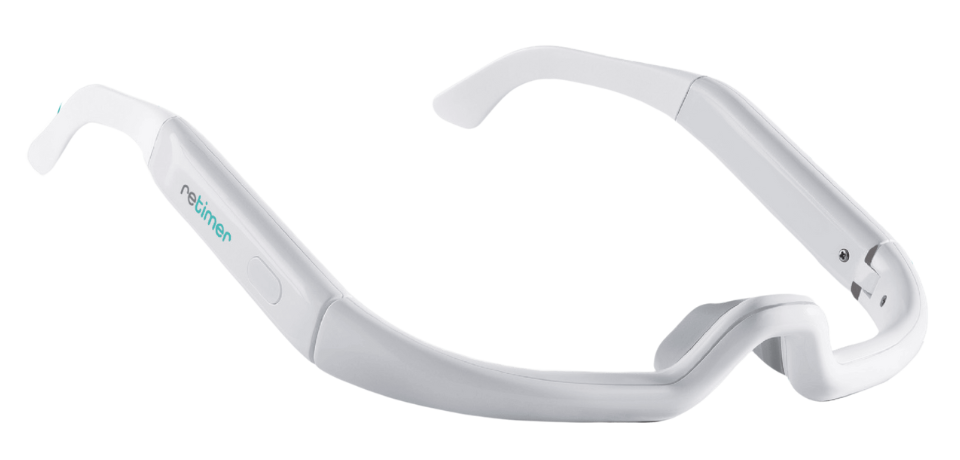
retimer 3 Light Therapy Glasses deliver precisely calibrated, 100% UV-free green-blue light to the eye’s specialised photoreceptors.
- Targeted resetting: By using retimer 3 during the personalised windows determined by the Jet Lag Calculator, users receive a light stimulus that mimics the circadian effects of natural daylight at the biological time when the SCN is most responsive.
- Controlled melatonin suppression: retimer 3 supports appropriate melatonin suppression when the body is attempting to sleep at an inappropriate local time, helping facilitate circadian phase advances or delays.
- Faster circadian re-entrainment: Rather than relying solely on the body’s natural adjustment of approximately one time zone per day, appropriately timed light therapy helps accelerate circadian re-entrainment, reducing travel fatigue while restoring normal sleep, alertness and cognitive performance.
Plan Ahead to Manage Jet Lag
For Re-Timer v2 users, the Jet Lag Calculator is the best way to understand when and how to use the device for maximum effectiveness. Since light therapy works best when delivered at the right time, factors such as your travel direction, the number of time zones crossed, your usual sleep-wake schedule, and your travel dates all influence your personalised plan.
The Jet Lag Calculator generates an indicative schedule that tells you exactly when to use your glasses during your flight, layover and when you arrive at your destination to help your body clock adjust more efficiently.
Jet Lag Calculator
-
What time do you go to bed?
-
What time do you wake up?
-
What city are you flying from?
-
What city are you flying to?
-
What date are you departing?
If you are using retimer 3, download the lifetime subscription-free upgraded app, which pairs seamlessly with the bluetooth-enabled retimer 3 device and includes an integrated Jet Lag Calculator. After entering your travel itinerary and usual sleep schedule, the app generates a personalised day-by-day light therapy plan. Your schedule is stored within the app, making it easy to follow the recommended light therapy sessions before departure, during travel where appropriate, and after arrival. The app continuously syncs with your retimer 3 device, helping you stay on track and adjust to your new time zone more effectively.
Regardless of the device you use, following your schedule is key. Appropriately timed light exposure helps your circadian rhythm adapt more quickly to the new time zone, reducing the duration and severity of jet lag symptoms.
Based on your travel itinerary and circadian profile, it guides you on when to use the device before departure, during travel where appropriate, and after arrival.
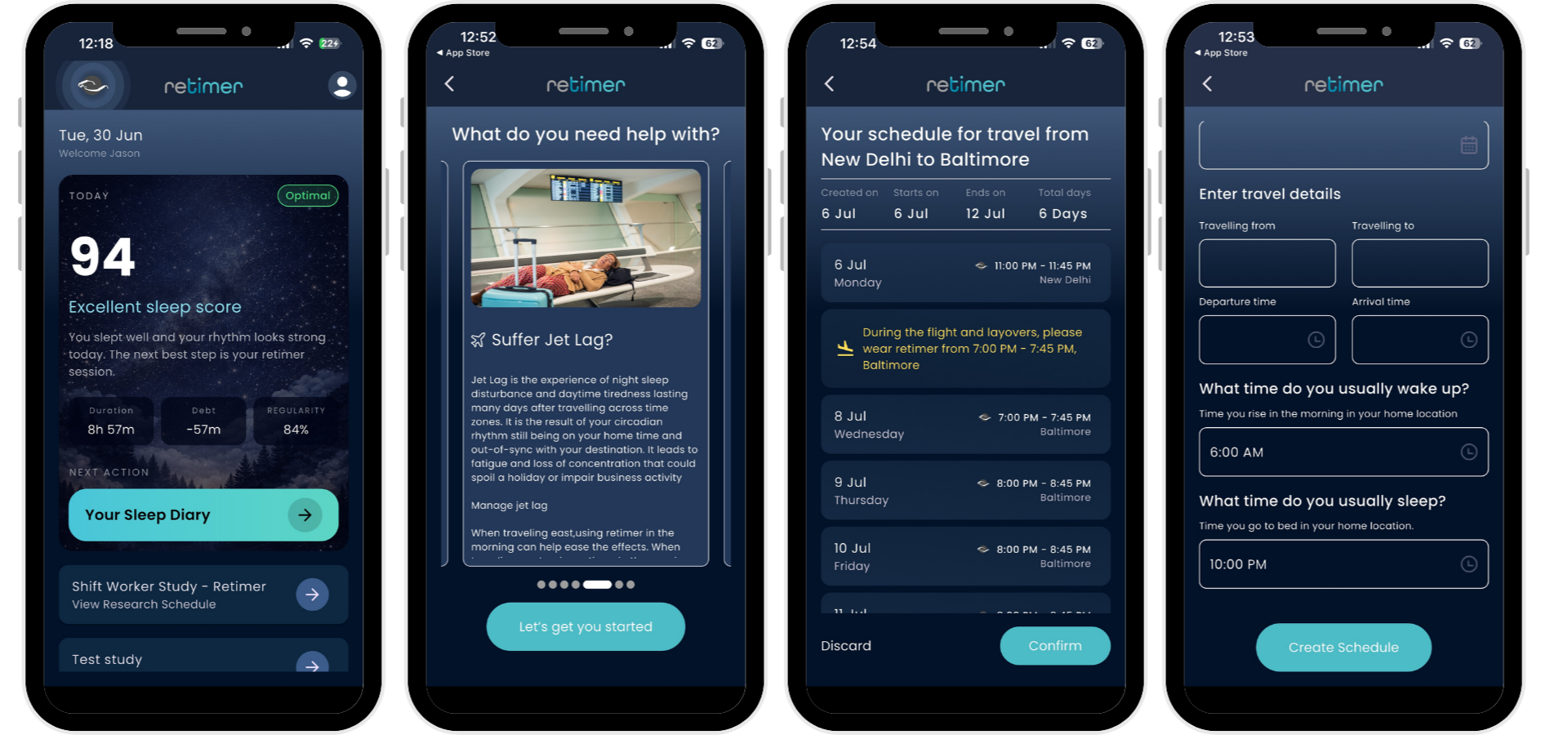
The retimer App translates your Jet Lag Calculator results into a practical, day-by-day light therapy schedule.
As your body gradually adapts to the destination time zone, the app adjusts your schedule throughout each stage of circadian re-entrainment, ensuring light exposure is delivered at biologically optimal times to support faster adaptation.
Why Eastward Travel Feels Worse Than Westward Travel
When traveling across time zones, the direction of travel has a significant impact on how your body adjusts.
Eastward travel is generally more challenging because it requires your body clock to advance, meaning you need to fall asleep and wake up earlier than usual. Since the human circadian rhythm naturally runs slightly longer than 24 hours, advancing the body clock is more difficult, often resulting in greater jet lag, poor sleep, daytime fatigue, and reduced alertness.
In contrast, westward travel requires the body clock to delay, allowing you to stay awake and sleep later, which aligns more closely with the body’s natural tendency. As a result, westward travel is typically associated with milder jet lag and a faster recovery.
The ‘One Day Per Time Zone’ Rule
Without intervention, the body typically adapts at a rate of approximately one time zone per day. During this period, travellers may experience disrupted sleep, fatigue and reduced cognitive performance while the circadian system gradually synchronises with the destination time zone.
Personalising Your Jet Lag Plan
The retimer Jet Lag Calculator for Re-Timer v2 uses your habitual sleep-wake schedule together with your travel itinerary to determine the optimal light therapy schedule for your journey while personalised recommendations are then integrated into the retimer 3 App, guiding light exposure at biologically optimal times to accelerate circadian re-entrainment and reduce the duration of jet lag symptoms.
Reset Your Body Clock Faster
As you understand how our circadian rhythm responds to light and using personalised light therapy at the right time, you can take a proactive approach to managing travel fatigue. Arriving refreshed starts with the right schedule and the right approach.