
Workouts are deeply gratifying, even while being physically demanding. There is a certain pull to pushing limits. The extra rep, the stronger lift, the pace you did not think you could hold. A part of this comes from the body’s own chemistry.
There is a quieter phase that often goes unnoticed between that immediate post-workout high and the longer arc of recovery. This is when the body begins shifting from performance to repair, redirecting energy toward stabilising systems that were pushed during exercise. Heart rate settles, stress hormones taper, and the groundwork for muscle repair and energy restoration starts to take shape. It is not as visible or rewarding as the workout itself, but it is where consistency is built and progress is quietly secured.
You know the surge of excitement and happiness you feel?
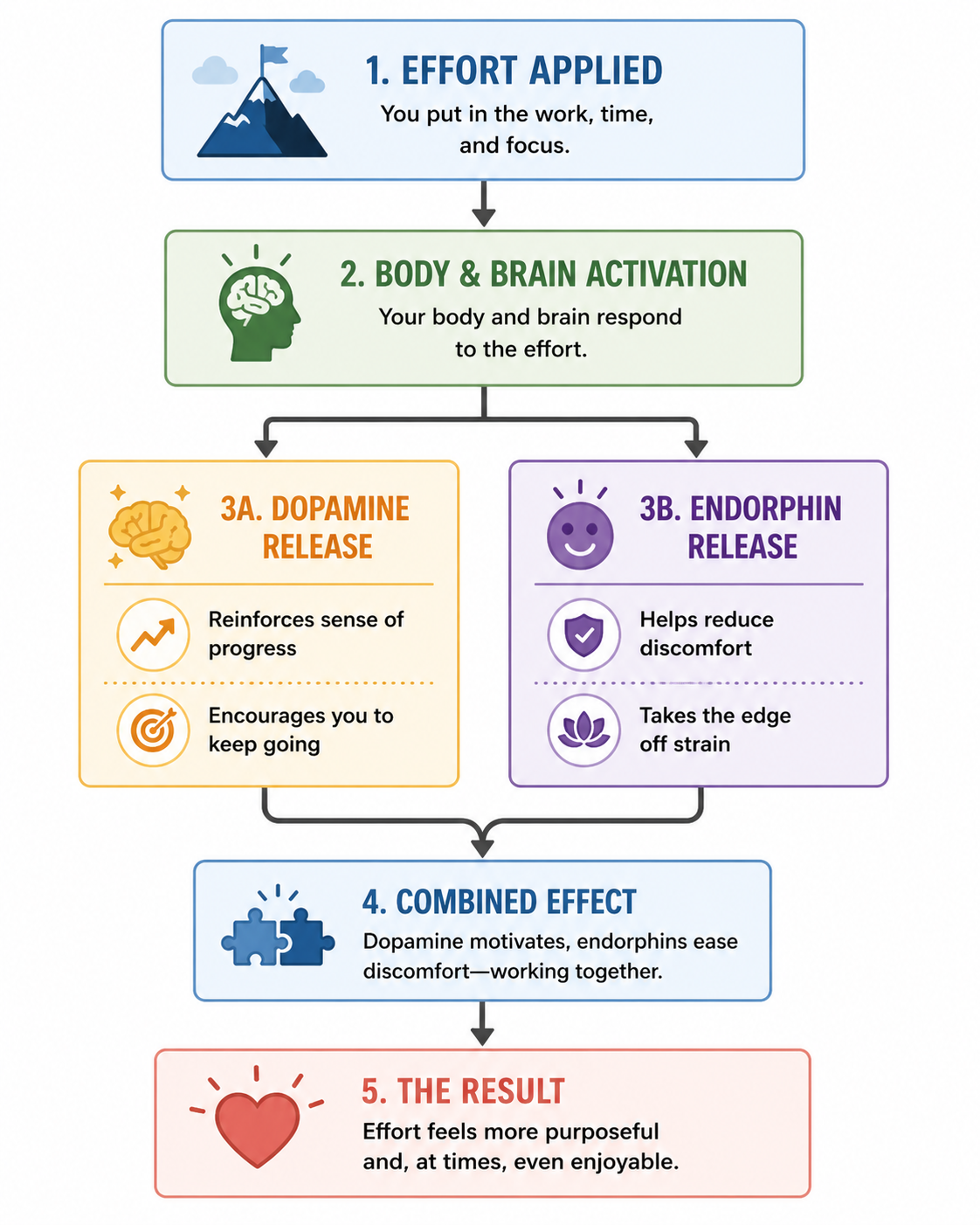
That’s your dopamine level and endorphins rising with the effort you put in. Dopamine reinforces the sense of progress and encourages you to keep going, while endorphins help reduce discomfort and take the edge off strain. The result is that effort feels more purposeful and, at times, even enjoyable.
The rush is both a reward and a validation. As we continue to push those boundaries, recovery begins to take on greater importance. Personal goalposts keep shifting, and the challenge builds as the body is asked to keep up. Over time, we develop a working understanding of recovery. Nutrition is planned, hydration is steady, soreness is managed, and there is a rhythm to how the body supports itself after effort.
Even with these practices in place, recovery does not always follow effort in a linear way. Some days the body responds well. On others, it feels slow, heavy, or out of sync. This inconsistency is often attributed to intensity, age, or conditioning, but timing plays an equally important role. Recovery depends on what we do and when the body’s internal processes, such as hormone release, muscle repair, and cellular regeneration are most active.
Recovery is a biologically timed process, regulated by the body’s internal clock. When this rhythm is aligned, recovery feels efficient and predictable. When it is not, even well-structured routines can feel ineffective.
Post-workout recovery sits at the centre of this process. It is the phase where the body rebuilds, restores energy, and adapts after physical exertion. Muscle repair takes place, inflammation is regulated, and performance gains are consolidated. The quality of this phase determines how well the body can perform the next time it is pushed. Yet, as consistent as our routines may be, outcomes can still vary, suggesting that recovery is influenced not just by effort, but by how and when the body is able to respond.
This raises an important question: are we training hard, but recovering out of time?
Circadian Rhythm as the Body’s Recovery Schedule
Circadian rhythm acts as the body’s internal schedule for repair, coordinating when key recovery processes such as hormonal release, muscle repair, inflammation control, and energy regulation take place. As this timing gets aligned, these processes work in a more organised and efficient way, allowing the body to recover with greater consistency.
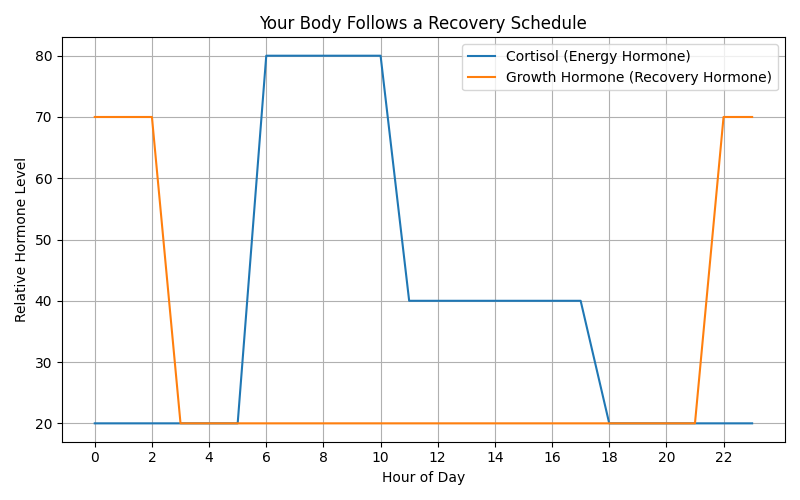
Hormonal timing works in our favour
Cortisol rises in the morning to support energy and gradually declines through the day, allowing recovery-focused processes to take over later. Growth hormone, which supports muscle repair and tissue rebuilding, also follows a circadian pattern. Alignment helps these hormones act when they are most useful.
Muscle repair and protein synthesis improve
Muscle recovery processes are influenced by circadian timing. When the body clock is aligned, protein synthesis and cellular repair occur in a more coordinated way, supporting faster recovery.
Inflammation is better regulated
Training creates controlled stress. Circadian rhythm helps regulate the inflammatory response. Misalignment can prolong inflammation and slow recovery.
Energy and fatigue cycles stabilise
Aligned rhythms support more predictable energy levels. The body recognises when to perform and when to recover, reducing persistent fatigue.
The body anticipates effort and repair
Consistent timing allows the body to prepare in advance. Training at similar times each day helps physiological systems anticipate stress and recovery, improving adaptation.
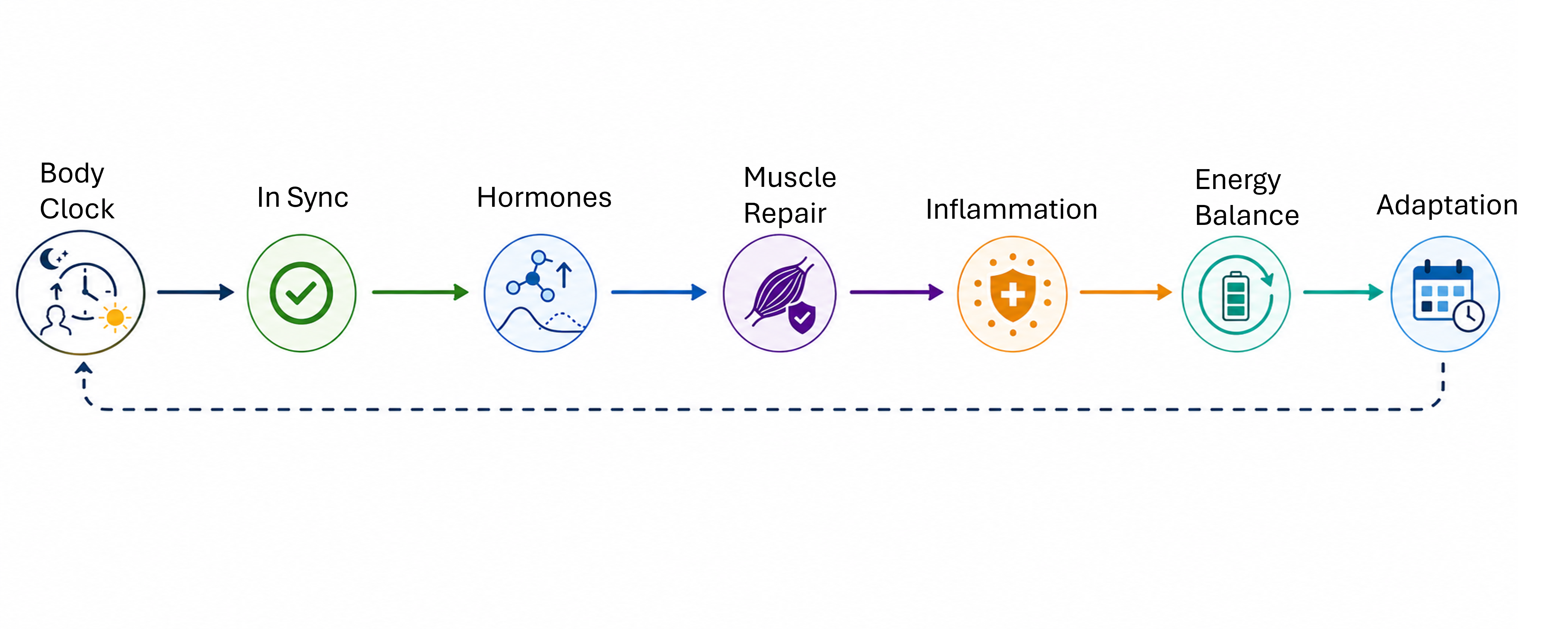
When circadian rhythm is misaligned, these processes still occur, but less efficiently. Recovery may feel slower, soreness can linger, and progress can feel harder to achieve despite doing the right things.
Circadian alignment does not replace recovery methods, it helps the body use them more effectively.
What Research Suggests About the Timing of Recovery and Performance
Research indicates that muscle repair, protein synthesis, and strength levels can vary through the day, influenced by the internal clock.
Take this for instance, a late evening workout followed by an early start the next morning. On paper, nothing has changed. In practice, performance feels harder. Warm-ups take longer, and energy feels forced.
This is often described as fatigue, but it may be a timing issue.
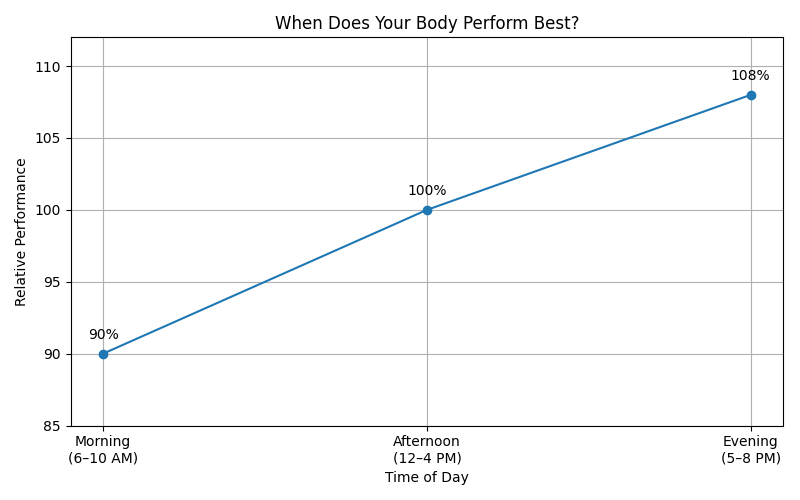
The body is being asked to perform or recover before it is ready. Hormones may not have reset, repair may still be ongoing, and the system may be slightly out of sync.
When training, nutrition, and rest happen at consistent times, the body begins to anticipate what comes next. Recovery becomes smoother, performance steadier, and unexplained off days become less frequent.
How Light Therapy and Wearables Like retimer, Support Circadian Alignment
Modern routines can make circadian alignment difficult. Early workouts, indoor schedules, travel, and irregular days can all disrupt natural timing.
Light therapy provides a structured way to realign the body’s internal clock by delivering controlled light exposure at specific times of the day. These signals help regulate circadian phase shifts, influencing hormone release, alertness, and recovery cycles.
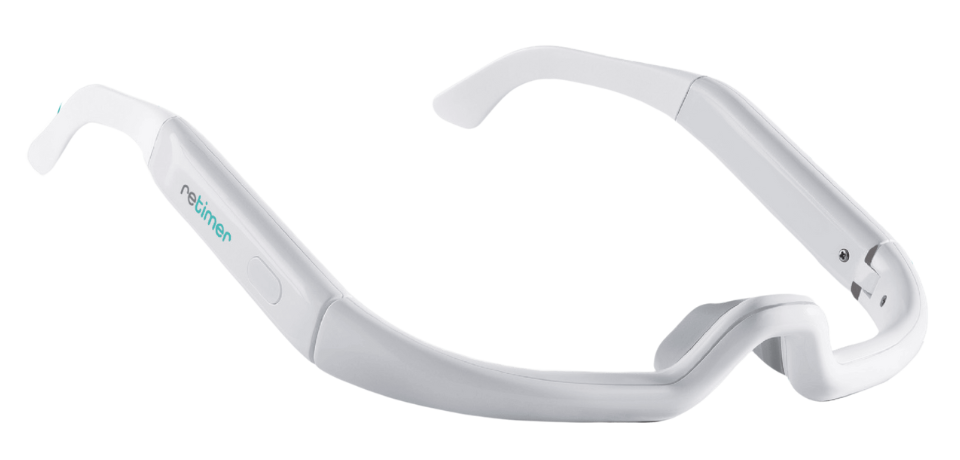
retimer builds on this by offering a wearable, consistent way to apply light therapy in daily routines. By guiding the timing of light exposure, it helps reinforce natural rhythms without requiring major changes to training or lifestyle.
For someone training regularly, the outcome is simple. Recovery becomes more predictable. The body feels less like it is catching up and more like it is keeping pace.
Practical Ways to Support Circadian-Aligned Recovery
- Train at similar times each day where possible
- Maintain consistent sleep and wake timings, even on rest days
- Prioritise morning light exposure to anchor your body clock
- Align meals with your active hours to support metabolic rhythm
- Limit bright light exposure late at night, especially from screens
These are steady signals that help the body organise performance and recovery more effectively.
Building Consistent Recovery Through Circadian Alignment
Recovery does not begin and end with the workout. It extends through the entire day. Nutrition timing, hydration, movement, and rest all play a role, but circadian rhythm provides the structure that allows these elements to work together.
When this rhythm is aligned, the body is better prepared to use what it is given. Nutrients are utilised more efficiently, energy levels feel steadier, and cellular repair becomes more effective. Recovery feels less like something you chase and more like something that happens as expected.
Athletes who maintain consistent routines and pay attention to light exposure often experience more reliable recovery. The changes are gradual, but noticeable.
Improving circadian alignment does not require a complete reset. It begins with consistency and a clearer understanding of how the body keeps time. Tools like light therapy can support this when natural cues are limited.
Over time, recovery becomes less uncertain. The body responds with greater consistency, and progress becomes easier to sustain.