How limiting time in bed combined with targeted light therapy is transforming outcomes for people with onset, maintenance and early awakening insomnia
For the 10–15% of adults living with chronic insomnia, the advice to “just try harder to sleep” is not only unhelpful, but it also actively makes things worse. Lying in bed awake reinforces the brain’s association between the bedroom and wakefulness, creating a cycle that becomes harder to break with every passing night. Yet the most effective evidence-based treatment for chronic insomnia does not come from a pill bottle. It comes from a counterintuitive prescription: spend less time in bed.
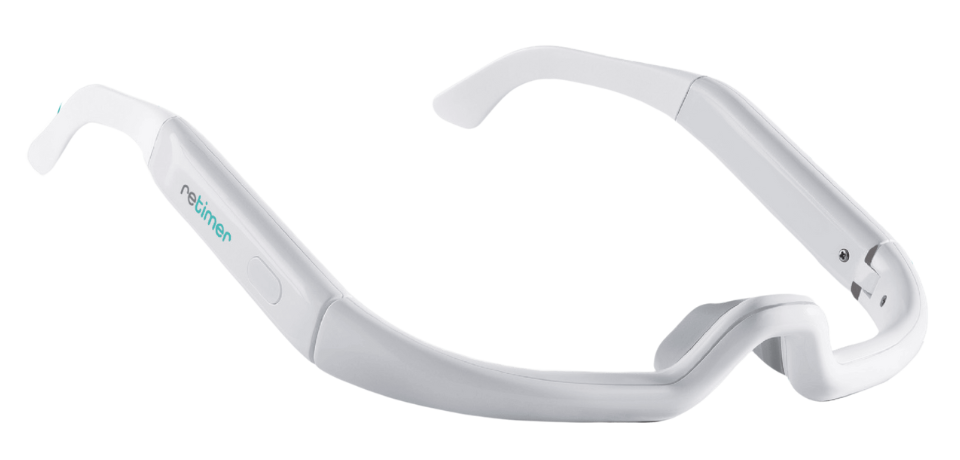
Bedtime Restriction Therapy (BRT) also known as Sleep Restriction Therapy (SRT) is now recognised as the single most powerful component of Cognitive Behavioural Therapy for Insomnia (CBT-I), the gold-standard treatment endorsed by sleep medicine bodies worldwide. This article explores how it works, who it helps, and how pairing it with retimer light therapy glasses developed from over 25 years of Flinders University sleep research can make the transition faster and the results longer lasting.
What Is Bedtime Restriction Therapy?
Developed by Dr Arthur Spielman at the City University of New York in the 1980s, SRT works on a deceptively simple principle: compress the time you spend in bed to match the amount of sleep you are getting then gradually expand it as your sleep improves.
Consider a common scenario: you go to bed at 10:30 pm and rise at 7:00 am — 8.5 hours in bed but you are only sleeping for around five hours. Your sleep efficiency is a poor 59%. Under SRT, your prescribed time in bed is reduced to five hours, perhaps 12:00 am to 5:00 am. That initial week feels uncomfortable because it is designed to be. The restricted window rapidly builds homeostatic sleep pressure, the biological drive to sleep, while also stabilising the circadian clock and reducing the hyperarousal that keeps insomniacs awake.
Once sleep efficiency crosses the 90% threshold meaning 90% of your time in bed is spent actually sleeping the window is expanded by 15 minutes. The process continues until you reach a healthy, sustainable sleep duration with high efficiency.
Three Types of Insomnia — One Powerful Solution
Insomnia is not a single condition. It presents in three distinct patterns, and SRT addresses each:
- Sleep Onset Insomnia: The inability to fall asleep within a normal time frame (often 30+ minutes). SRT builds sleep pressure so intense that the brain surrenders to sleep quickly research published in Sleep (Kyle et al., 2014) showed Sleep Onset Latency (SOL) fell from an average of 32.2 minutes at baseline to just 9.4 minutes after four weeks of SRT.
- Sleep Maintenance Insomnia: Waking repeatedly during the night. SRT consolidates sleep architecture by strengthening the circadian signal. The same Kyle et al. study recorded Wake After Sleep Onset (WASO) dropping from 66.8 minutes to just 12.4 minutes post-treatment a reduction of over 80%.
- Early Morning Awakening: Waking earlier than desired and being unable to return to sleep often linked to an advanced circadian phase. SRT anchors the wake time and, when combined with strategically timed light exposure, can shift the body clock to a later phase, reducing premature awakenings.

Crucially, a 2025 European Sleep Research Society randomised controlled trial of 234 chronic insomnia patients confirmed SRT as the first-line choice over, achieving faster and greater improvements in insomnia severity.
Dr Michael Mosley at Flinders University
Perhaps no account makes the case for SRT more vividly than that of the late Dr Michael Mosley the acclaimed British medical journalist and chronic insomniac who enrolled in a pioneering eight-week clinical trial at the Flinders University Sleep Institute in Adelaide, as documented in the SBS documentary series Australia’s Sleep Revolution (2024).
“I had difficulty going to sleep and kept waking up at 3 am with thoughts rushing through my head,” Dr Mosley wrote. “Going to bed, which was once a real pleasure, was something I began to approach with a sense of unease.”
After comprehensive monitoring including a temperature-sensing electronic pill that tracked his core body temperature (a proxy for circadian phase) the Flinders team, led by Professor Leon Lack and Professor Danny Eckert, identified the source of Mosley’s early-morning awakenings: his circadian clock was running faster than normal. His core temperature reached its lowest point around 1:00 am some three hours earlier than typical causing his body to “wake for the day” at 3:30 am.
“For me this meant going to bed at 11pm and getting up each morning at 5am. It was quite brutal to start with, but in combination with getting more evening light, I was soon sleeping better than I had for a long time. By the end of the eight-week study I was declared insomnia free.”
— Dr Michael Mosley, Daily Mail, 2025 (from Fast Asleep / 4 Weeks to Better Sleep)
The treatment prescribed was a two-pronged approach. First, SRT: a strict 11:00 pm to 5:00 am window that built sleep pressure and gradually reset his sleep architecture. Second, evening bright light therapy using retimer Light Therapy Glasses, developed by Professor Lack himself, to push Mosley’s circadian clock later and suppress the premature release of melatonin that was triggering his 3:00 am wake-ups.
A fellow trial participant, Priyanka, had the mirror problem extreme sleep onset insomnia caused by a delayed circadian clock. She was prescribed morning retimer use to advance her clock earlier. “It’s been life changing,” she reported. “I am able to wake up without feeling like I’m fighting my body, and I’m ready to start my day in a very, very positive mindset.”

The Dream Team: SRT + retimer Light Therapy
Bedtime Restriction Therapy and bright light therapy are not merely compatible they are synergistic. While SRT addresses the behavioural dimension of insomnia (time in bed, sleep pressure, hyperarousal), light therapy specifically the blue-green wavelength emitted by retimer addresses the circadian dimension.
retimer was developed from over 25 years of circadian rhythm research by Professor Leon Lack and Dr Helen Wright at Flinders University. The device emits the precise wavelength of light most effective at suppressing melatonin and resetting the suprachiasmatic nucleus the brain’s master clock. Unlike a fixed light box, retimer’s wearable glasses format means users can move freely during their morning or evening routine while receiving the full therapeutic dose.
The combined protocol works as follows:
- SRT Foundation: SRT restricts time in bed, building sleep drive and reconditioning the bed as a sleep trigger.
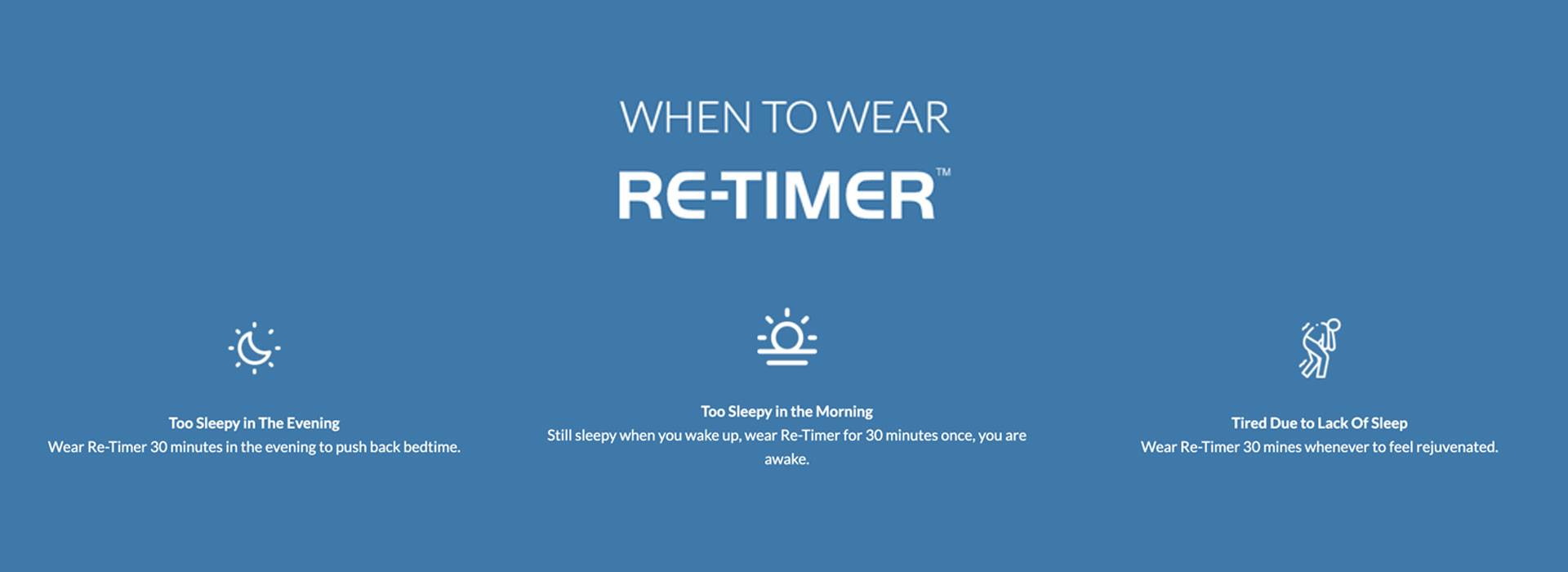
- Light for Onset & Maintenance: Morning retimer use (for sleep onset or maintenance insomnia) advances the circadian phase, helping users fall asleep earlier at night and reducing middle-of-the-night awakenings.
- Light for Early Awakening: Evening retimer use (for early-morning awakening / advanced phase) delays the circadian phase, pushing the natural “morning” signal later and allowing uninterrupted sleep until a socially appropriate time.
- Entrainment: Consistent wake times across both therapies entrains the circadian clock, accelerating the normalisation of sleep architecture.
“By limiting your time in bed and exposing yourself to bright light at the right time, you’re sending strong signals to your body about when it’s time to sleep and when it’s time to be awake. This consistent approach can significantly improve your sleep quality and duration.”
— retimer.com.au — Bright Light Therapy
The Evidence Base
Key published research supporting SRT and light therapy for insomnia:
| Source | Key Finding |
| Kyle et al., Sleep (2014) — PMC3900612 | SRT reduced SOL from 32→9 min, WASO from 66→12 min; sleep efficiency rose from 68%→91%; maintained at 3 months |
| ESRS RCT (2025), 234 patients | SRT confirmed as first-line CBT-I component; faster & greater insomnia reduction than Sleep Compression Therapy |
| Maurer et al., Sleep Medicine Reviews (2021) | SRT effectively improves insomnia severity and sleep continuity in the short term |
| Flinders University / SBS (2024) | Dr Mosley declared insomnia-free after 8-week SRT + retimer protocol; participant Priyanka reported “life-changing” results |
| Lack & Wright, Flinders University (1987–2024) | 25+ years of circadian research; retimer shown to phase-shift circadian rhythms; published in leading sleep journals |
Conclusion: Less Time in Bed, More Life Well Lived
Chronic insomnia is not a willpower problem, and it is not best solved by a prescription pad. The evidence is clear: Bedtime Restriction Therapy, the most potent single component of CBT-I, addresses insomnia at its source resetting the homeostatic and circadian mechanisms that govern healthy sleep. Whether the presenting complaint is difficulty falling asleep, waking through the night, or rising before the alarm at 3:00 am, SRT has a documented, durable track record.
When paired with retimer light therapy, the wearable born from Professor Leon Lack’s quarter-century of sleep science at Flinders University the approach gains a powerful second dimension. Light calibrates the circadian clock from the outside; SRT disciplines it from within. Together, they represent a complete, drug-free solution for the full spectrum of insomnia as Dr Michael Mosley discovered, and as the growing body of clinical literature confirms.
For anyone who has stared at the ceiling at 2:00 am wondering if they will ever sleep properly again the answer, backed by science, is yes.