
Most of us know the obvious consequences of poor sleep. The foggy head, the short temper and the way the whole day feels like wading through wet cement.
There is something else happening beneath the surface, something slower and quieter; that has been drawing the attention of researchers for decades now.
The connection between how well we sleep and how much we weigh is far more direct, and far more biological than most people realize.
Ghrelin and Leptin: The Hormones Behind Hunger
It begins with two hormones: Ghrelin and Leptin. Ghrelin is the signal that tells the brain we are hungry while Leptin is the signal that tells the brain we have had enough. In a well-rested body, these two hormones maintain a kind of ongoing conversation, keeping appetite broadly in check.
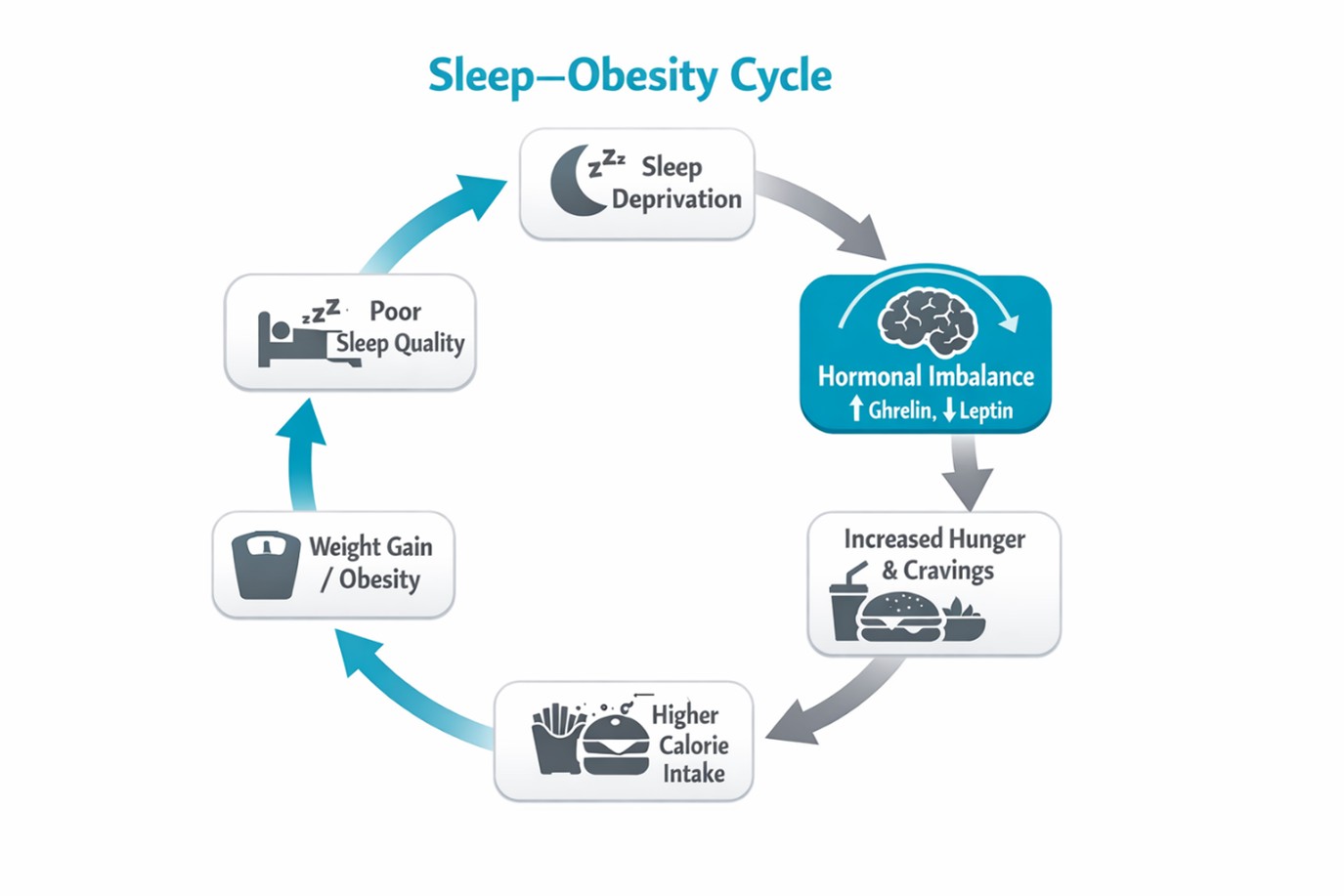
Even a single night of poor sleep is enough to disrupt that balance causing ghrelin to rise and leptin to fall.
Suddenly the brain is receiving a persistent, low-level message that we need to eat, even when the body has had more than enough. A single night of poor sleep can increase appetite by up to 24%, with cravings shifting specifically toward high-calorie, high-sugar foods.
When Willpower Is Not the Problem, Sleep Deprivation Is
The sleep-deprived brain can change which food it finds appealing. Studies using brain imaging have found that after poor sleep, the reward centres light up more strongly in response to junk food, while the regions responsible for impulse control become less active. The hand reaching for something sweet after hours is being directed by a brain that is genuinely impaired, not weak.
The Cortisol and Insulin Factor
There is also the matter of cortisol, the stress hormone that rises with sleep deprivation and encourages the body to store fat, particularly around the abdomen. Insulin sensitivity also worsens significantly even after a few nights of disrupted sleep, nudging the body steadily toward the metabolic conditions that precede type 2 diabetes.
The picture that emerges is weight gain combined with a whole physiological cascade, quietly unfolding each time rest gets pushed aside.
What makes this particularly striking is the circularity of it. Poor sleep promotes weight gain, and excess weight, particularly when it accumulates around the neck and upper airway, increases the likelihood of conditions like sleep apnea, which then further degrades sleep quality. The two problems feed each other, often without either being properly identified as the cause.
Sleep as the Reset Button
The good news is that this works in reverse too. Prioritising, and maintaining a consistent sleep routine leaves us feeling better in the morning. It also actively recalibrates the hormonal environment. Ghrelin settles, Leptin does its job again and subsequently Cortisol drops. The brain recovers its capacity to distinguish hunger from habit and craving from genuine need. In clinical settings, improving sleep quality has been shown to support weight loss efforts in ways that diet and exercise alone sometimes cannot.
Using Light for A Consistent Sleep Routine
One of the most powerful and most underused tools for improving sleep quality is light. The body’s internal clock, known as the circadian rhythm, is governed by the timing and intensity of light exposure.
When that clock runs on time, sleep arrives at the right hour, unfolds through its proper stages, and delivers the hormonal reset the body depends on. When it drifts, as it does for millions of people through irregular schedules, shift work, and too much artificial light after dark, sleep quality suffers in ways that quietly drive appetite dysregulation and weight gain.
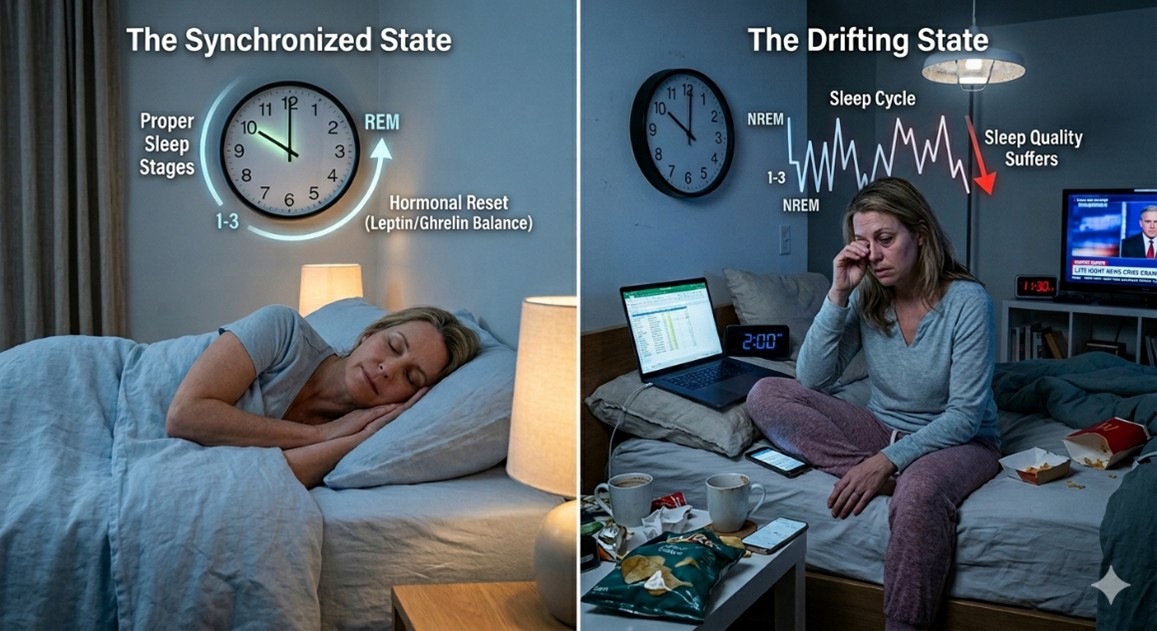
Morning light exposure, in particular, is one of the most effective signals the body has for aligning the sleep-wake cycle. It suppresses residual melatonin, sharpens alertness, and sets in motion the hormonal sequence that will eventually bring on healthy, deep sleep that night.
For people struggling with weight and sleep together, light therapy addresses something that nutrition plans and exercise routines may not reach, it is the timing of the biological system that manages how we rest, recover, and regulate appetite. It is not a substitute for good sleep habits, but it is a meaningful tool that most people bypass.
retimer: Tool for Sleep Management and Weight Loss
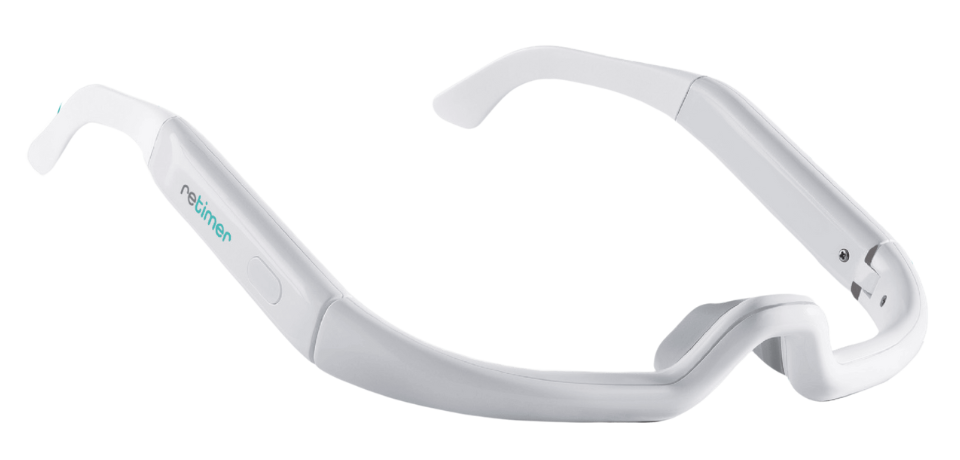
retimer was developed by sleep researchers at Flinders University in South Australia, and it does something that traditional light therapy lamps cannot: it goes where we go. Worn like a pair of glasses, retimer emits a soft blue-green light directly, at a wavelength shown through clinical research to be particularly effective at stimulating the photoreceptors responsible for setting the circadian clock.
The practical difference this makes is significant. Most people do not have to get enough sunlight in the morning. retimer fits into the routine that already exists. It can be worn over a cup of coffee, during breakfast, while getting ready. The light does its work without demanding time that most people feel they do not have.
For those dealing with the sleep-obesity cycle, retimer offers a way to begin repairing the foundation. Better circadian alignment means more consistent, architecturally complete sleep.
More complete sleep means ghrelin and leptin behaving as they should. It means cortisol not spiking unnecessarily. It also means waking up with a brain that is genuinely capable of making the choices we intend to make, rather than one that is already working against us before the day has begun.
The research behind retimer is peer-reviewed and rooted in decades of circadian science. It is a practical, evidence-based tool for people who want to treat sleep as seriously as they treat the rest of their health.
The Bigger Picture
We live in a culture that treats exhaustion as a badge of productivity, and sleep as something to be negotiated around everything else. The body does not negotiate; it adapts. The adaptations it makes when chronically under-rested are ones that work quietly against us, meals by meals, night by night.
Sleep is not the opposite of getting things done. In many respects, it is the foundation that makes everything else possible.