
Everyone tells you motherhood is magical. Fewer people tell you it comes with a side of profound, destabilising exhaustion. Sleep deprivation after childbirth is not a minor inconvenience. For millions of new mothers, it is a health crisis hiding in plain sight.
Being a parent is a rollercoaster ride, full of moments where you might feel like you’re flying solo, navigating through the wild twists and turns of life’s ups and downs. It can be really gratifying but can also be a trying time for some, bringing about significant emotional, physical, and lifestyle changes, which, while exciting, can trigger difficult feelings and mental health struggles. Right from anxiety, energy loss, mood fluctuation and depression to overwhelming stress, both the new mom and the developing baby’s well-being can be affected.
Often, mothers prioritize their physical health and that of their baby, neglecting their mental wellness. They may believe that ensuring a healthy baby is the ultimate goal, which can lead to challenges after giving birth. It’s crucial not to dismiss these feelings. Postpartum depression is a real and common experience, affecting many new moms. Despite the joys of welcoming a new life into the world, the emotional and physical changes that come with it can be overwhelming. Understanding that postpartum depression is a normal part of the journey can be incredibly validating.
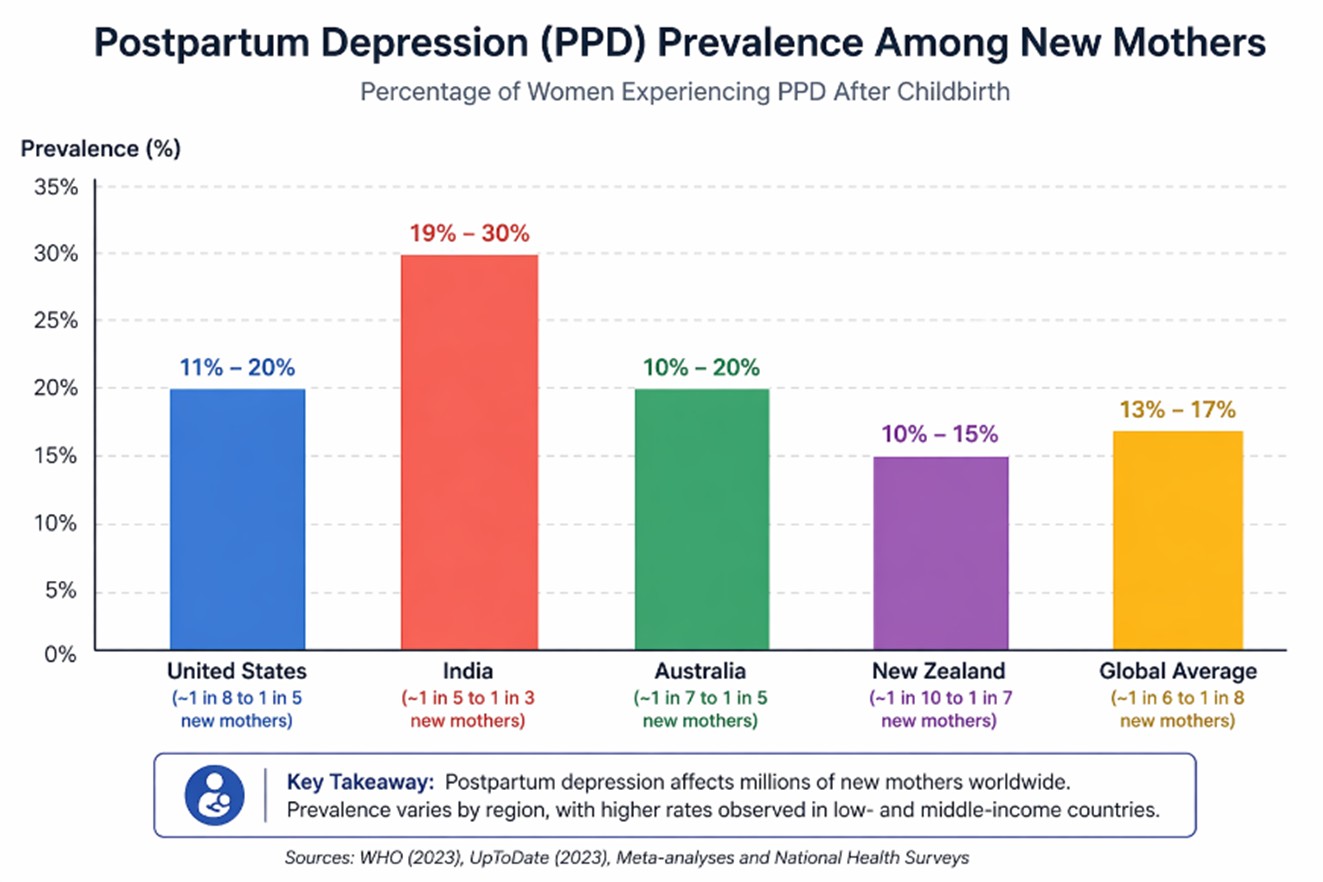
It affects ~ 1 in 6 new mothers globally. In India, rates are higher, with estimates suggesting up to 1 in 5 to 1 in 3 women experience it. In countries like the United States, Australia, and New Zealand, prevalence typically ranges between 10% and 20%, highlighting that this is not an isolated issue, but a widespread and under-recognised health challenge.
The Compounding Impact of Sleep Deprivation
In the first year after birth, new mothers barely get adequate sleep. The body is running on energy deficit while simultaneously healing from one of the most physically demanding events of a lifetime. Physical recovery demands deep, restorative sleep for tissue repair, hormones rebalance, and the immune system rebuild. Without this, the healing slows down, and the emotional toll gets equally serious.
Disrupted sleep is one of the strongest predictors of postpartum depression, affecting mood regulation, anxiety, and emotional resilience in ways that compound every single day. It doesn’t just leave you feeling tired, it alters how the brain processes emotion, lowering stress tolerance, increasing irritability, and making everyday challenges feel harder to manage. Energy levels become inconsistent, with fatigue that isn’t fully relieved by rest, often accompanied by mental fog and reduced motivation. Over time, this combination of low mood and depleted energy can make it more difficult to stay engaged, recover between demands, and maintain a stable sense of wellbeing.
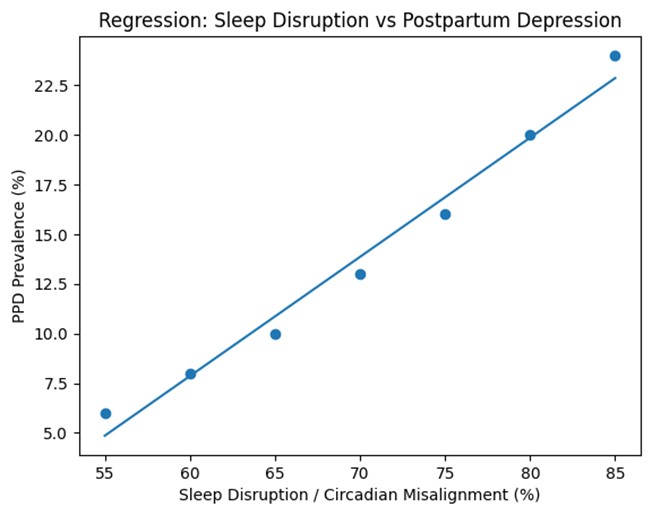
*PPD prevalence is the percentage of new mothers experiencing postpartum depression within a given population,mranging globally from about 5% to 25%, depending on conditions and risk factors. WHO
Then there is the cognitive fog that new moms commonly report as slower recall, scattered attention, and poor decision-making. This should not be mistaken as a personality trait or taken in jest, it is a documented neurological effect of sustained sleep loss. The brain cannot consolidate memories or process information properly when it has been denied rest night after night.
The Body Clock Breaks Down
The timing of sleep disruption is often overlooked, alongside its quantity and quality. Newborns feed on a roughly 90-minute cycle with no awareness of day or night, repeatedly fracturing the circadian rhythm, the body’s internal clock that regulates everything from cortisol to mood to metabolism.
Persistent misalignment of this rhythm means no amount of napping with the baby can fully compensate for the sleep disruption. The body needs light cues to reset itself and this is where light therapy becomes useful.
The Science of Resetting With retimer Light Therapy Glasses
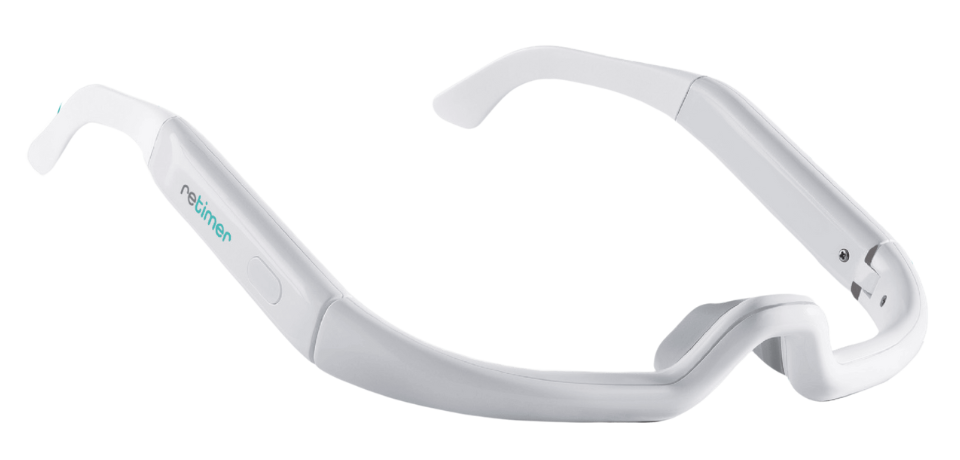
retimer is a wearable light therapy device designed like a pair of glasses, developed to help shift and stabilise the body clock. Its portable design means it can be used during a morning feed, on a walk, or over breakfast fitting seamlessly into the rhythm of early motherhood.
A study from the University of Michigan Department of Psychiatry and Rush University Medical Center, published in Archives of Women’s Mental Health, examined the use of the retimer light therapy device in women with postpartum depression. Conducted as an open-label clinical trial, participants used retimer each morning for five weeks, with outcomes assessed through clinician-rated depression scales and objective sleep measures.
The findings showed meaningful improvements in both depressive symptoms and sleep efficiency and the simplicity of the intervention stands out. Rather than relying on uninterrupted sleep or complex routines, retimer works with the realities of early motherhood by reinforcing a consistent morning light cue. Over time, that regularity helps re-align the circadian system, supporting mood regulation and more efficient recovery even when sleep remains less than ideal.
Even Celebrities Struggle with Postpartum Depression
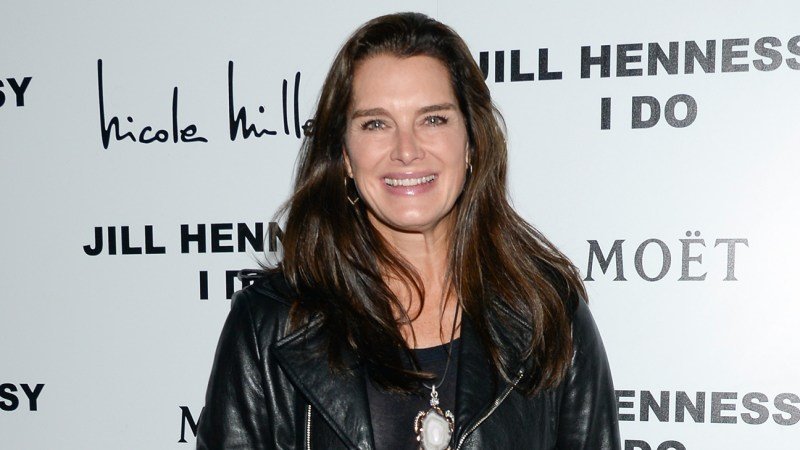
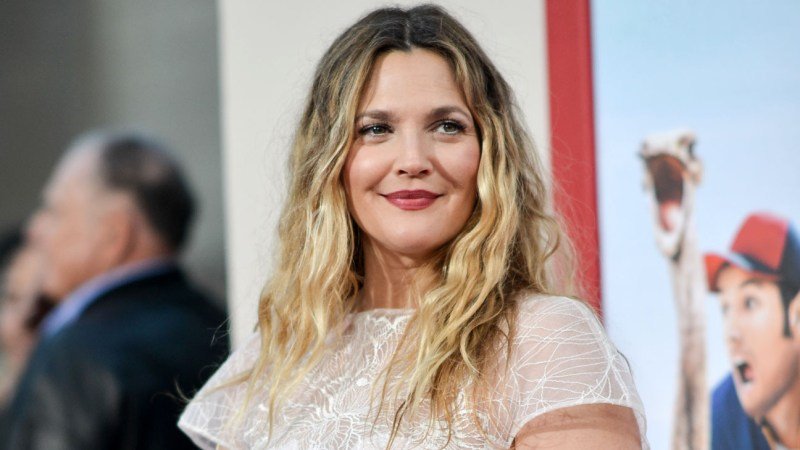
You’re Not Alone, Even Celebrities Who You Think Have It All Struggle with Postpartum Depression Numerous celebrity moms, including Hayden Panettiere, Drew Barrymore , Brooke Shields, Amanda Peet, Courteney Cox, Bryce Dallas Howard, Gwenetth Paltrov, Bryce Dallas Howard, Gwyneth Paltrow, Alanis Morissette & Lisa Rinna, have openly shared their experiences with postpartum depression (PPD). Their candidness has helped raise awareness about the challenges associated with PPD. These women have described feelings of mental anguish, emotional numbness, difficulty acknowledging depression, intense anxiety, despair, and guilt or shame, highlighting the diverse and often complex nature of postpartum experiences.